

-
41 интерфейс станка
Русско-английский исловарь по машиностроению и автоматизации производства > интерфейс станка
-
42 interfejs maszynowy
• machine interfaceSłownik polsko-angielski dla inżynierów > interfejs maszynowy
-
43 интерфейс УЧПУ
Русско-английский словарь по машиностроению > интерфейс УЧПУ
-
44 связанный со станком
Русско-английский словарь по машиностроению > связанный со станком
-
45 MIOS
-
46 человеко-машинный интерфейс
- operator-machine communication
- MMI
- man-machine interface
- man-machine communication
- human-machine interface
- human-computer interface
- human interface device
- human interface
- HMI
- computer human interface
- CHI
человеко-машинный интерфейс (ЧМИ)
Технические средства, предназначенные для обеспечения непосредственного взаимодействия между оператором и оборудованием и дающие возможность оператору управлять оборудованием и контролировать его функционирование.
Примечание
Такие средства могут включать приводимые в действие вручную органы управления, контрольные устройства, дисплеи.
[ ГОСТ Р МЭК 60447-2000]
человекомашинный интерфейс (ЧМИ)
Технические средства контроля и управления, являющиеся частью оборудования, предназначенные для обеспечения непосредственного взаимодействия между оператором и оборудованием и дающие возможность оператору управлять оборудованием и контролировать его функционирование (ГОСТ Р МЭК 60447).
Примечание
Такие средства могут включать приводимые в действие вручную органы управления, контрольные устройства и дисплеи.
[ ГОСТ Р МЭК 60073-2000]
человеко-машинный интерфейс
Средства обеспечения двусторонней связи "оператор - технологическое оборудование" (АСУ ТП). Название класса средств, в который входят подклассы:
SCADA (Supervisory Control and Data Acquisition) - Операторское управление и сбор данных от технологического оборудования.
DCS (Distributed Control Systems) - Распределенная система управления технологическим оборудованием.
[ http://www.morepc.ru/dict/]Параллельные тексты EN-RU
MotorSys™ iPMCC solutions can integrate a dedicated human-machine interface (HMI) or communicate via a personal computer directly on the motor starters.
[Schneider Electric]Интеллектуальный центр распределения электроэнергии и управления электродвигателями MotorSys™ может иметь в своем составе специальный человеко-машинный интерфейс (ЧМИ). В качестве альтернативы используется обмен данным между персональным компьютером и пускателями.
[Перевод Интент]
HMI на базе операторских станций
Самое, пожалуй, главное в системе управления - это организация взаимодействия между человеком и программно-аппаратным комплексом. Обеспечение такого взаимодействия и есть задача человеко-машинного интерфейса (HMI, human machine interface).
На мой взгляд, в аббревиатуре “АСУ ТП” ключевым является слово “автоматизированная”, что подразумевает непосредственное участие человека в процессе реализации системой определенных задач. Очевидно, что чем лучше организован HMI, тем эффективнее человек сможет решать поставленные задачи.
Как же организован HMI в современных АСУ ТП?
Существует, как минимум, два подхода реализации функционала HMI:- На базе специализированных рабочих станций оператора, устанавливаемых в центральной диспетчерской;
- На базе панелей локального управления, устанавливаемых непосредственно в цеху по близости с контролируемым технологическим объектам.
Иногда эти два варианта комбинируют, чтобы достичь наибольшей гибкости управления. В данной статье речь пойдет о первом варианте организации операторского уровня.
Аппаратно рабочая станция оператора (OS, operator station) представляет собой ни что иное как персональный компьютер. Как правило, станция снабжается несколькими широкоэкранными мониторами, функциональной клавиатурой и необходимыми сетевыми адаптерами для подключения к сетям верхнего уровня (например, на базе Industrial Ethernet). Станция оператора несколько отличается от привычных для нас офисных компьютеров, прежде всего, своим исполнением и эксплуатационными характеристиками (а также ценой 4000 - 10 000 долларов).
На рисунке 1 изображена рабочая станция оператора системы SIMATIC PCS7 производства Siemens, обладающая следующими техническими характеристиками:
Процессор: Intel Pentium 4, 3.4 ГГц;
Память: DDR2 SDRAM до 4 ГБ;
Материнская плата: ChipSet Intel 945G;
Жесткий диск: SATA-RAID 1/2 x 120 ГБ;
Слоты: 4 x PCI, 2 x PCI E x 1, 1 x PCI E x 16;
Степень защиты: IP 31;
Температура при эксплуатации: 5 – 45 C;
Влажность: 5 – 95 % (без образования конденсата);
Операционная система: Windows XP Professional/2003 Server.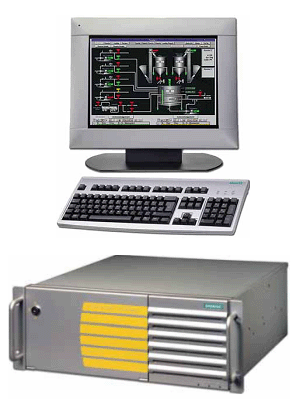
Рис. 1. Пример промышленной рабочей станции оператора.Системный блок может быть как настольного исполнения ( desktop), так и для монтажа в 19” стойку ( rack-mounted). Чаще применяется второй вариант: системный блок монтируется в запираемую стойку для лучшей защищенности и предотвращения несанкционированного доступа.
Какое программное обеспечение используется?
На станции оператора устанавливается программный пакет визуализации технологического процесса (часто называемый SCADA). Большинство пакетов визуализации работают под управлением операционных систем семейства Windows (Windows NT 4.0, Windows 2000/XP, Windows 2003 Server), что, на мой взгляд, является большим минусом.
Программное обеспечение визуализации призвано выполнять следующие задачи:- Отображение технологической информации в удобной для человека графической форме (как правило, в виде интерактивных мнемосхем) – Process Visualization;
- Отображение аварийных сигнализаций технологического процесса – Alarm Visualization;
- Архивирование технологических данных (сбор истории процесса) – Historical Archiving;
- Предоставление оператору возможности манипулировать (управлять) объектами управления – Operator Control.
- Контроль доступа и протоколирование действий оператора – Access Control and Operator’s Actions Archiving.
- Автоматизированное составление отчетов за произвольный интервал времени (посменные отчеты, еженедельные, ежемесячные и т.д.) – Automated Reporting.
Как правило, SCADA состоит из двух частей:
- Среды разработки, где инженер рисует и программирует технологические мнемосхемы;
- Среды исполнения, необходимой для выполнения сконфигурированных мнемосхем в режиме runtime. Фактически это режим повседневной эксплуатации.
Существует две схемы подключения операторских станций к системе управления, а точнее уровню управления. В рамках первой схемы каждая операторская станция подключается к контроллерам уровня управления напрямую или с помощью промежуточного коммутатора (см. рисунок 2). Подключенная таким образом операторская станция работает независимо от других станций сети, и поэтому часто называется одиночной (пусть Вас не смущает такое название, на самом деле таких станций в сети может быть несколько).
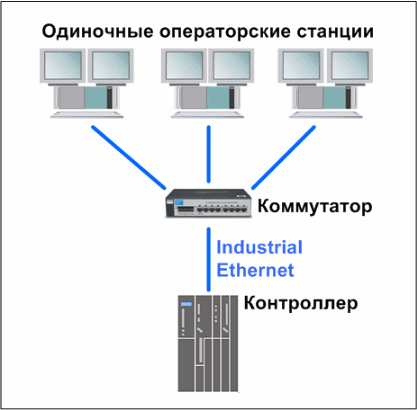
Рис. 2. Схема подключения одиночных операторских станций к уровню управления.Есть и другой вариант. Часто операторские станции подключают к серверу или резервированной паре серверов, а серверы в свою очередь подключаются к промышленным контроллерам. Таким образом, сервер, являясь неким буфером, постоянно считывает данные с контроллера и предоставляет их по запросу рабочим станциям. Станции, подключенные по такой схеме, часто называют клиентами (см. рисунок 3).
Как происходит информационный обмен?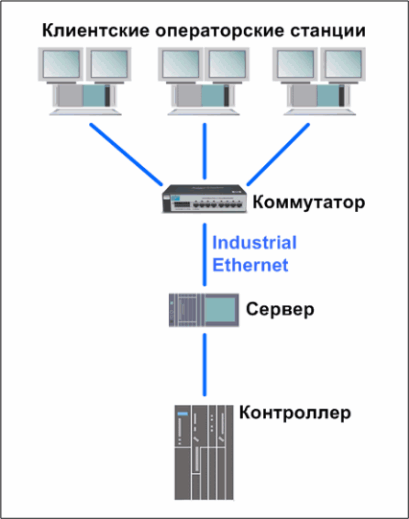
Рис. 3. Клиент-серверная архитектура операторского уровня.
Для сопряжения операторской станции с промышленным контроллером на первой устанавливается специальное ПО, называемое драйвером ввода/вывода. Драйвер ввода/вывода поддерживает совместимый с контроллером коммуникационный протокол и позволяет прикладным программам считывать с контроллера параметры или наоборот записывать в него. Пакет визуализации обращается к драйверу ввода/вывода каждый раз, когда требуется обновление отображаемой информации или запись измененных оператором данных. Для взаимодействия пакета визуализации и драйвера ввода/вывода используется несколько протоколов, наиболее популярные из которых OPC (OLE for Process Control) и NetDDE (Network Dynamic Data Exchange). Обобщенно можно сказать, что OPC и NetDDE – это протоколы информационного обмена между различными приложениями, которые могут выполняться как на одном, так и на разных компьютерах. На рисунках 4 и 5 изображено, как взаимодействуют программные компоненты при различных схемах построения операторского уровня.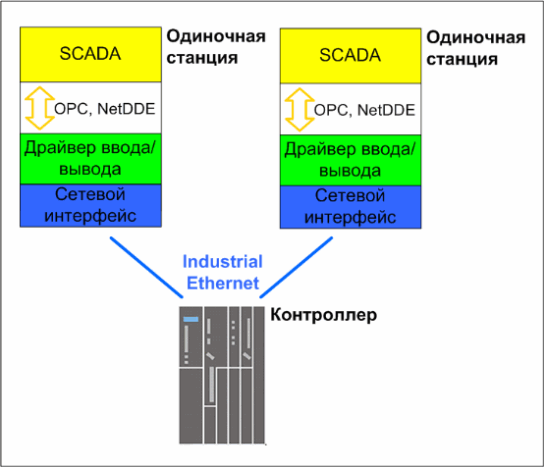
Рис. 4. Схема взаимодействия программных модулей при использовании одиночных станций.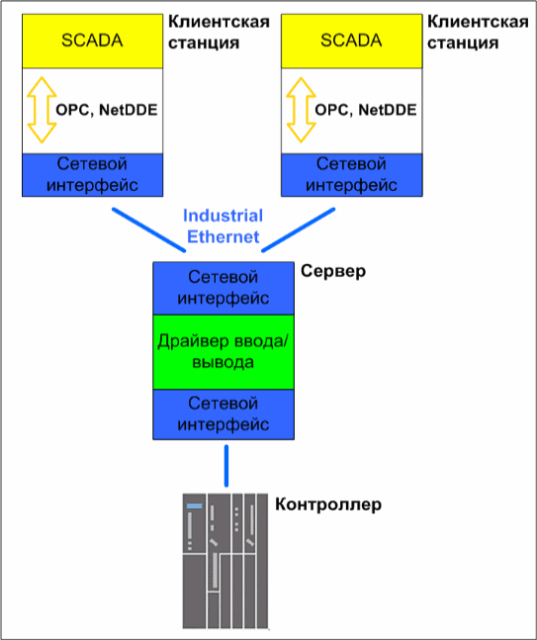
Рис. 5. Схема взаимодействия программных модулей при использовании клиент-серверной архитектуры.
Как выглядит SCADA?
Разберем простой пример. На рисунке 6 приведена абстрактная схема технологического процесса, хотя полноценным процессом это назвать трудно.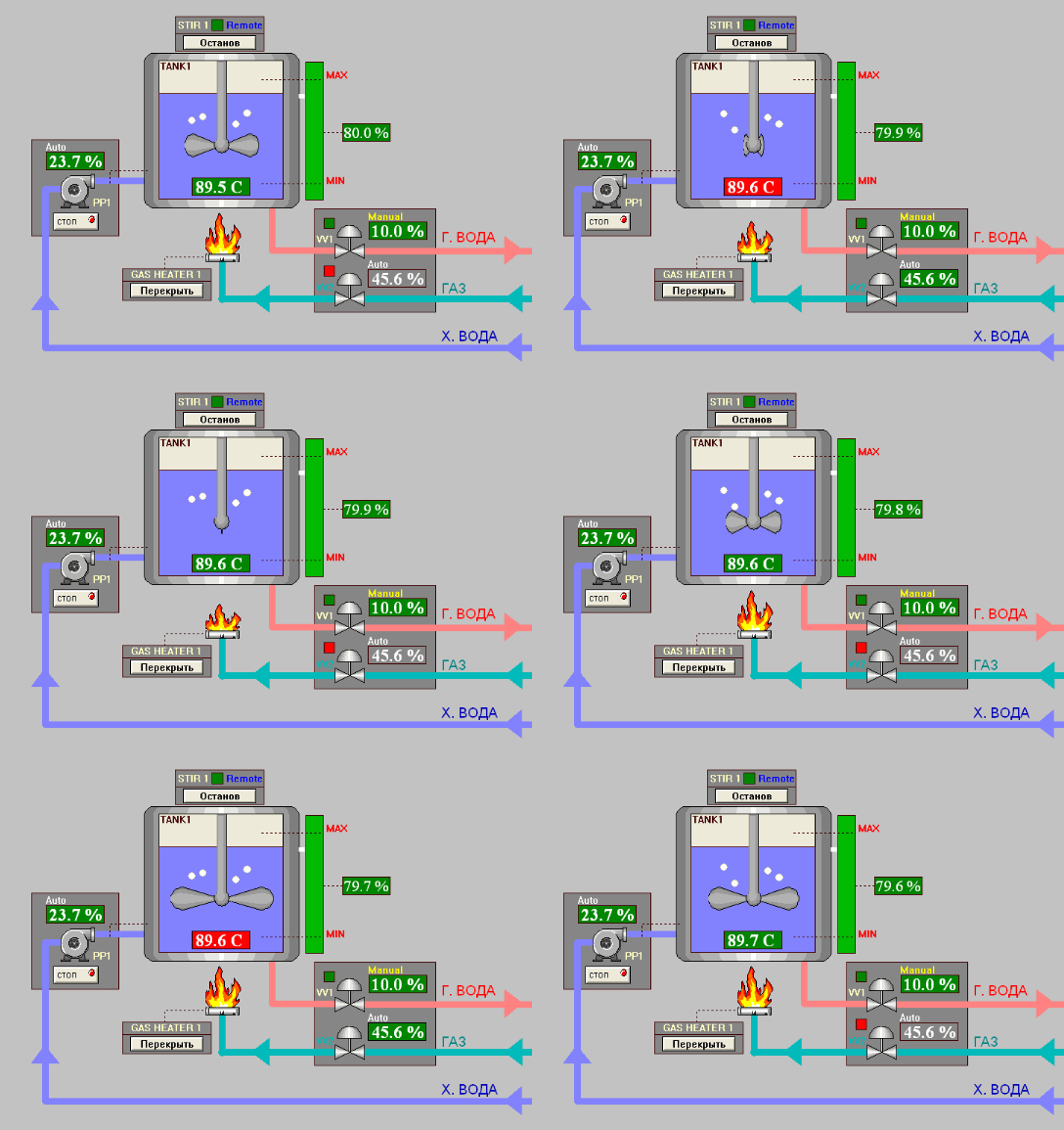 Рис. 6. Пример операторской мнемосхемы.
На рисунке 6 изображен очень упрощенный вариант операторской мнемосхемы для управления тех. процессом. Как видно, резервуар (емкость) наполняется водой. Задача системы - нагреть эту воду до определенной температуры. Для нагрева воды используется газовая горелка. Интенсивность горения регулируется клапаном подачи газа. Также должен быть насос для закачки воды в резервуар и клапан для спуска воды.
На мнемосхеме отображаются основные технологические параметры, такие как: температура воды; уровень воды в резервуаре; работа насосов; состояние клапанов и т.д. Эти данные обновляются на экране с заданной частотой. Если какой-либо параметр достигает аварийного значения, соответствующее поле начинает мигать, привлекая внимание оператора.
Сигналы ввода/вывода и исполнительные механизмы отображаются на мнемосхемах в виде интерактивных графических символов (иконок). Каждому типу сигналов и исполнительных механизмов присваивается свой символ: для дискретного сигнала это может быть переключатель, кнопка или лампочка; для аналогового – ползунок, диаграмма или текстовое поле; для двигателей и насосов – более сложные фейсплейты ( faceplates). Каждый символ, как правило, представляет собой отдельный ActiveX компонент. Вообще технология ActiveX широко используется в SCADA-пакетах, так как позволяет разработчику подгружать дополнительные символы, не входящие в стандартную библиотеку, а также разрабатывать свои собственные графические элементы, используя высокоуровневые языки программирования.
Допустим, оператор хочет включить насос. Для этого он щелкает по его иконке и вызывает панель управления ( faceplate). На этой панели он может выполнить определенные манипуляции: включить или выключить насос, подтвердить аварийную сигнализацию, перевести его в режим “техобслуживания” и т.д. (см. рисунок 7).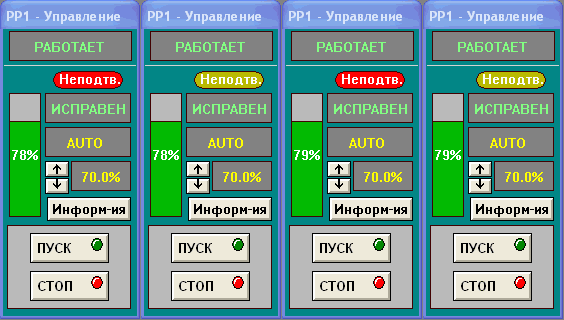 Рис. 7. Пример фейсплейта для управления насосом.Оператор также может посмотреть график изменения интересующего его технологического параметра, например, за прошедшую неделю. Для этого ему надо вызвать тренд ( trend) и выбрать соответствующий параметр для отображения. Пример тренда реального времени показан на рисунке 8.
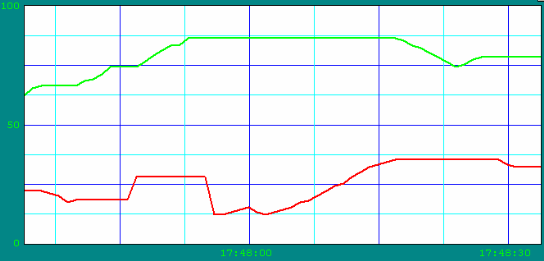 Рис. 8. Пример отображения двух параметров на тренде реального времени.
Для более детального обзора сообщений и аварийных сигнализаций оператор может воспользоваться специальной панелью ( alarm panel), пример которой изображен на рисунке 9. Это отсортированный список сигнализаций (alarms), представленный в удобной для восприятия форме. Оператор может подтвердить ту или иную аварийную сигнализацию, применить фильтр или просто ее скрыть.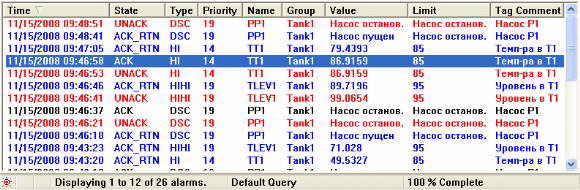 Рис. 9. Панель сообщений и аварийных сигнализаций.
Говоря о SCADA, инженеры часто оперируют таким важным понятием как “тэг” ( tag). Тэг является по существу некой переменной программы визуализации и может быть использован как для локального хранения данных внутри программы, так и в качестве ссылки на внешний параметр процесса. Тэги могут быть разных типов, начиная от обычных числовых данных и кончая структурой с множеством полей. Например, один визуализируемый параметр ввода/вывода – это тэг, или функциональный блок PID-регулятора, выполняемый внутри контроллера, - это тоже тэг. Ниже представлена сильно упрощенная структура тэга, соответствующего простому PID-регулятору:
Tag Name = “MyPID”;
Tag Type = PID;
Fields (список параметров):
MyPID.OP
MyPID.SP
MyPID.PV
MyPID.PR
MyPID.TI
MyPID.DI
MyPID.Mode
MyPID.RemoteSP
MyPID.Alarms и т.д.
В комплексной прикладной программе может быть несколько тысяч тэгов. Производители SCADA-пакетов это знают и поэтому применяют политику лицензирования на основе количества используемых тэгов. Каждая купленная лицензия жестко ограничивает суммарное количество тэгов, которые можно использовать в программе. Очевидно, чем больше тегов поддерживает лицензия, тем дороже она стоит; так, например, лицензия на 60 000 тэгов может обойтись в 5000 тыс. долларов или даже дороже. В дополнение к этому многие производители SCADA формируют весьма существенную разницу в цене между “голой” средой исполнения и полноценной средой разработки; естественно, последняя с таким же количеством тэгов будет стоить заметно дороже.
Сегодня на рынке представлено большое количество различных SCADA-пакетов, наиболее популярные из которых представлены ниже:
1. Wonderware Intouch;
2. Simatic WinCC;
3. Iconics Genesis32;
4. Citect;
5. Adastra Trace Mode
Лидирующие позиции занимают Wonderware Intouch (производства Invensys) и Simatic WinCC (разработки Siemens) с суммарным количеством инсталляций более 80 тыс. в мире. Пакет визуализации технологического процесса может поставляться как в составе комплексной системы управления, так и в виде отдельного программного продукта. В последнем случае SCADA комплектуется набором драйверов ввода/вывода для коммуникации с контроллерами различных производителей. [ http://kazanets.narod.ru/HMI_PART1.htm]Тематики
- автоматизация, основные понятия
- автоматизированные системы
Синонимы
EN
Русско-английский словарь нормативно-технической терминологии > человеко-машинный интерфейс
47 человеко-машинный интерфейс
1) Information technology: MMI, computer human interface, human-computer interface, human-machine interface, man-machine interface, HSI2) Programming: human interface device3) Automation: human interface4) Sakhalin R: human machine interface5) Chemical weapons: Human-Machine interface (MMI) (ЧМИ)6) Makarov: the man-machine interfaceУниверсальный русско-английский словарь > человеко-машинный интерфейс
48 человеко-машинный интерфейс
brain-machine interface, human-computer interface, human-machine interface, man-computer interface, man-machine interface, human interface deviceРусско-английский словарь по электронике > человеко-машинный интерфейс
49 человеко-машинный интерфейс
human interface device, brain-machine interface, human-computer interface, human-machine interface, man-computer interface, man-machine interfaceРусско-английский словарь по радиоэлектронике > человеко-машинный интерфейс
50 интерфейс человек - машина
интерфейс человек - машина
ИЧМ
Экран дисплея или часть интеллектуального электронного устройства, или автономное устройство, представляющие необходимые данные в логическом формате, с которым взаимодействует пользователь, а также, при необходимости, клавишная панель, обеспечивающая доступ пользователю и взаимодействие.
[ ГОСТ Р 54325-2011 (IEC/TS 61850-2:2003)]EN
Human Machine Interface
HMI
display screen, either part of an IED or as a stand-alone device, presenting relevant data in a logical format, with which the user interacts. An HMI will typically present windows, icons, menus, pointers, and may include a keypad to enable user access and interaction
[IEC 61850-2, ed. 1.0 (2003-08)]Тематики
Синонимы
EN
Русско-английский словарь нормативно-технической терминологии > интерфейс человек - машина
51 Benutzerschnittstelle
f <tech.allg> ■ user interface; man/machine interface; human/machine interface rare52 lenguaje
m.1 language.lenguaje cifrado codelenguaje coloquial/comercial colloquial/business languagelenguaje corporal body languagelenguaje gestual gestureslenguaje de alto nivel/de bajo nivel (computing) high-level/low-level languagelenguaje por señas sign language2 jargon, langue, parlance.* * *1 (gen) language2 (habla) speech* * *noun m.1) language2) speech* * *SM1) [gen] language2) (Literat) style3) (Inform) languagelenguaje informático, lenguaje máquina — machine language
* * *masculino language* * *= language, parlance, speech, diction, script, idiom.Ex. A paraphrase is an interpretation of the concepts featured in a document, written in the language of the writer of the paraphrase.Ex. For example, in psychology, S for subject, and E for experimenter are common parlance.Ex. The labels on the left have been chosen to come as close as possible to everyday speech.Ex. Some abstracts have poor grammar and diction.Ex. High quality (400dpi) TIFF files were stored on archival tape, and JPEG thumbnails and full-size images placed on server to be accessed by CGI script.Ex. Using a popular idiom, we might inquire, 'Is this the real McCoy'?.----* búsqueda en lenguaje natural = natural language searching.* en lenguaje automatizado = machine-language.* índice en lenguaje natural = natural language index.* indización en lenguaje controlado = controlled-language indexing.* indización en lenguaje libre = free language indexing.* indización en lenguaje natural = natural language indexing.* interfaz en lenguaje natural = natural language interface.* intérprete de lenguaje de signos = sign language interpreter.* lenguaje algorítmico = algorithmic language.* lenguaje artificial = artificial language.* lenguaje científico = scientific language.* lenguaje coloquial = slang, colloquial language, familiar language, cant.* Lenguaje Común de Instrucción de EURONET = EURONET Common Command Language.* lenguaje controlado = controlled language.* lenguaje corporal = body language.* lenguaje cotidiano = everyday speech, everyday talk, everyday discourse, everyday language.* lenguaje de búsqueda = search language.* lenguaje de codificación = coding language.* lenguaje de consulta = query language, access language.* lenguaje de conversión = switching language.* lenguaje de indización = index language, indexing language.* lenguaje de indización alfabética = alphabetical indexing language.* lenguaje de indización controlado = controlled indexing language.* lenguaje de indización libre = free indexing language.* lenguaje de indización natural = natural indexing language.* lenguaje de interrogación = query language.* lenguaje de la calle = street slang.* lenguaje de la cibernética = cyberspeak.* lenguaje de los contratos = contract language.* lenguaje de objetos = object language.* lenguaje de órdenes = command language.* lenguaje de programación = programming language, computer language, scripting language, script.* lenguaje de programación algorítmico = algorithmic programming language.* lenguaje de recuperación = retrieval language.* lenguaje de signos = sign language.* lenguaje documental = index language, indexing language.* lenguaje ensamblador = assembly language.* lenguaje escrito = written language.* Lenguaje Estándar Universal para el Análisis Formal de Documentos (SGML) = SGML (Standard Generalised Markup Language).* lenguaje familiar = colloquial language, familiar language.* lenguaje grosero = foul language.* lenguaje humano = human language.* lenguaje libre = free language.* lenguaje mediador = intermediate language.* lenguaje natural = natural language.* lenguaje normal = plain language.* lenguaje ordinario = foul language.* lenguaje para el análisis formal de documentos web = markup language.* lenguaje periodístico = journalese.* lenguaje sexista = sexist language.* lenguaje soez = foul language.* lenguaje técnico = jargon.* lenguaje técnico informático = computerese.* lenguaje tecnológico incomprensible = techno-babble.* lenguaje universal = universal language.* lenguaje vulgar = adult language, vulgar language.* Norma Internacional para los Lenguajes de Instrucción = International Standard for Command Languages.* procesamiento en lenguaje natural = natural language processing.* sistema en lenguaje natural = natural language system.* término del lenguaje controlado = controlled-language term.* término del lenguaje de indización controlado = controlled index-language term.* término del lenguaje natural = natural-language term.* trastorno del lenguaje = language disorder, speech disorder.* XML (Lenguaje Extensible para el Análisis de Documentos) = XML (Extensible Markup Language).* * *masculino language* * *= language, parlance, speech, diction, script, idiom.Ex: A paraphrase is an interpretation of the concepts featured in a document, written in the language of the writer of the paraphrase.
Ex: For example, in psychology, S for subject, and E for experimenter are common parlance.Ex: The labels on the left have been chosen to come as close as possible to everyday speech.Ex: Some abstracts have poor grammar and diction.Ex: High quality (400dpi) TIFF files were stored on archival tape, and JPEG thumbnails and full-size images placed on server to be accessed by CGI script.Ex: Using a popular idiom, we might inquire, 'Is this the real McCoy'?.* búsqueda en lenguaje natural = natural language searching.* en lenguaje automatizado = machine-language.* índice en lenguaje natural = natural language index.* indización en lenguaje controlado = controlled-language indexing.* indización en lenguaje libre = free language indexing.* indización en lenguaje natural = natural language indexing.* interfaz en lenguaje natural = natural language interface.* intérprete de lenguaje de signos = sign language interpreter.* lenguaje algorítmico = algorithmic language.* lenguaje artificial = artificial language.* lenguaje científico = scientific language.* lenguaje coloquial = slang, colloquial language, familiar language, cant.* Lenguaje Común de Instrucción de EURONET = EURONET Common Command Language.* lenguaje controlado = controlled language.* lenguaje corporal = body language.* lenguaje cotidiano = everyday speech, everyday talk, everyday discourse, everyday language.* lenguaje de búsqueda = search language.* lenguaje de codificación = coding language.* lenguaje de consulta = query language, access language.* lenguaje de conversión = switching language.* lenguaje de indización = index language, indexing language.* lenguaje de indización alfabética = alphabetical indexing language.* lenguaje de indización controlado = controlled indexing language.* lenguaje de indización libre = free indexing language.* lenguaje de indización natural = natural indexing language.* lenguaje de interrogación = query language.* lenguaje de la calle = street slang.* lenguaje de la cibernética = cyberspeak.* lenguaje de los contratos = contract language.* lenguaje de objetos = object language.* lenguaje de órdenes = command language.* lenguaje de programación = programming language, computer language, scripting language, script.* lenguaje de programación algorítmico = algorithmic programming language.* lenguaje de recuperación = retrieval language.* lenguaje de signos = sign language.* lenguaje documental = index language, indexing language.* lenguaje ensamblador = assembly language.* lenguaje escrito = written language.* Lenguaje Estándar Universal para el Análisis Formal de Documentos (SGML) = SGML (Standard Generalised Markup Language).* lenguaje familiar = colloquial language, familiar language.* lenguaje grosero = foul language.* lenguaje humano = human language.* lenguaje libre = free language.* lenguaje mediador = intermediate language.* lenguaje natural = natural language.* lenguaje normal = plain language.* lenguaje ordinario = foul language.* lenguaje para el análisis formal de documentos web = markup language.* lenguaje periodístico = journalese.* lenguaje sexista = sexist language.* lenguaje soez = foul language.* lenguaje técnico = jargon.* lenguaje técnico informático = computerese.* lenguaje tecnológico incomprensible = techno-babble.* lenguaje universal = universal language.* lenguaje vulgar = adult language, vulgar language.* Norma Internacional para los Lenguajes de Instrucción = International Standard for Command Languages.* procesamiento en lenguaje natural = natural language processing.* sistema en lenguaje natural = natural language system.* término del lenguaje controlado = controlled-language term.* término del lenguaje de indización controlado = controlled index-language term.* término del lenguaje natural = natural-language term.* trastorno del lenguaje = language disorder, speech disorder.* XML (Lenguaje Extensible para el Análisis de Documentos) = XML (Extensible Markup Language).* * *languagelenguaje hablado/escrito spoken/written languagelenguaje periodístico journalistic languageCompuestos:body language● lenguaje gestual or de gestossign language● lenguaje de or por señas( esp AmL) sign language* * *
lenguaje sustantivo masculino
language
lenguaje sustantivo masculino language
' lenguaje' also found in these entries:
Spanish:
chino
- Cobol
- escueta
- escueto
- infante
- macarrónica
- macarrónico
- malsonante
- propiedad
- pupa
- retorcida
- retorcido
- rotunda
- rotundo
- simbólica
- simbólico
- suelta
- suelto
- académico
- accesible
- calle
- castizo
- chispeante
- chocar
- crudo
- cuenta
- delicado
- depurado
- depurar
- directo
- empobrecer
- erudito
- especializado
- expresivo
- familiar
- florido
- galimatías
- grosero
- hablado
- hinchado
- indecente
- llano
- mordaz
- pomposo
- procaz
- pulido
- redacción
- rico
- sonoro
- sucio
English:
bad
- body language
- coarse
- computer language
- crude
- flowery
- formal
- foul
- idiom
- improper
- language
- raunchy
- rude
- shocking
- sign language
- smut
- speech
- tummy
- yet
- body
- hypertext markup language
- lay
- low
- sign
* * *lenguaje nmlanguage;sólo entienden el lenguaje de la violencia violence is the only language they understandInformát lenguaje de alto nivel high-level language; Informát lenguaje de autor authoring language; Informát lenguaje de bajo nivel low-level language;lenguaje cifrado code;lenguaje coloquial colloquial language;Informát lenguaje comando command language; Informát lenguaje de comandos command language;lenguaje comercial business language;lenguaje corporal body language;Informát lenguaje ensamblador assembly language;lenguaje gestual gestures;Informát lenguaje máquina machine language; Informát lenguaje de programación programming language;lenguaje de señas sign language;lenguaje por signos sign language;lenguaje de los sordomudos sign language* * *m language* * *lenguaje nm1) : language, speech2)lenguaje de gestos : sign language3)lenguaje de programación : programming language* * *lenguaje n1. (en general) language2. (habla) speech53 экраноплан
1) Aviation: ground effect vehicle (GEV), wing-in-surface-effect ship (WISE), ekranoplan, sea skimmer, flarecraft, wing-in-ground-effect (WIG) vehicle2) Naval: aerodynamic craft, aerofoil boat, air-craft-in-ground-effect, airfoil boat, dynamic interface vehicle, ground-effect wing, near-surface vehicle, ram wing, ram wing surface effect ship, wing-in-ground-effect machine, winged hull, winged vehicle3) Military: aerodynamic( ground effect) craft, ground effects vehicle, ram-wing (ground effect) craft, ram-wing surface effects vehicle, surface effects system, surface-effects vehicle, wing-in-ground, wing-in-ground effect system, winged surface effects vehicle4) Engineering: ground-effect machine, interface vehicle, ram wing surface effect vehicle, ram-wing machine, ram-wing surface-effect vehicle, wing-in-ground effect craft, winged surface effect vehicle, winged surface-effect vehicle5) Automobile industry: ram wing machine6) Makarov: ground-effect craft, surface effect vehicle54 distribuidor
adj.distributing, distributor.m.1 distributor, stockist, dealer, supplier.2 distributor.3 spreading nozzle, delivery nozzle.* * *► adjetivo1 distributing, distributive► nombre masculino,nombre femenino1 distributor2 COMERCIO wholesaler1 AUTOMÓVIL distributor————————1 AUTOMÓVIL distributor* * *distribuidor, -a1.ADJ(Com)casa distribuidora — distributor, distribution company
2.SM / F (=persona) [de productos] distributor; (Correos) sorter; (Com) dealer, stockist3. SM1) (=máquina)2) (Aut) distributor3) LAm (Aut) motorway exit, highway exit (EEUU)* * *I- dora masculino, femenino (Com) distributorII1) (Auto, Mec) distributor2) (Ven) ( en una carretera) interchange, cloverleaf* * *= distributor, outlet, provider, spinner, supplier, vendor, deliverer, distributive, stockist, aggregator, upstream, jobber, dealership.Ex. A distributor is an agent or agency that has exclusive or shared marketing rights for an item.Ex. It would seem as if the country is almost awash with outlets for the sale of books.Ex. The information available on Prestel changes as the information providers come and go.Ex. Online system hosts, sometimes known as online system suppliers, online service vendors and online service spinners, are responsible for mounting data bases upon a computer.Ex. The receipt of materials and invoices and suppliers' reports are recorded in acquisitions records.Ex. Thus some current awareness services can be purchased from external vendors, whilst others may be offered by a library or information unit to its particular group of users.Ex. The service has as a goal the active participation of end users as deliverers as well as recipients of the service.Ex. As noted earlier, OCLC, in common with the other utilities, is moving towards a more distributive and local service = Como se ha indicado anteriormente, la OCLC, al igual que otros servicios, está avanzando hacia un servicio más local y más distribuido.Ex. The library is often the only stockist in Scandinavia of some journals = En Escandinavia, la biblioteca a menudo es la única proveedora de algunas revistas.Ex. Many publishers have decided to offer their electronic journals through an aggregator, an intermediate service, which aggregates the titles from many different publishers under one interface or search system.Ex. The exchange of trading information on a regular basis influences the balance company bargaining power between upstream and downstream companies in grocery marketing.Ex. Many library managers believe that the services provided by jobbers and other middlemen are well worth the additional cost.Ex. More and more new car buyers are refusing to walk out of a dealership without metallic paint despite the cost of metallic and standard paints being no different.----* agencia distribuidora = releasing agent.* distribuidor de bases de datos = online system host, database host, host system, online service vendor.* distribuidor de bases de datos en línea = online vendor.* distribuidor de información = information provider.* distribuidor de información en línea = host, online host.* distribuidor de libros = book dealer.* distribuidor de recursos = resource allocator.* distribuidor de revistas = journal host.* distribuidor de revistas electrónicas = e-journal host.* distribuidor que concede licencias = licensor.* * *I- dora masculino, femenino (Com) distributorII1) (Auto, Mec) distributor2) (Ven) ( en una carretera) interchange, cloverleaf* * *= distributor, outlet, provider, spinner, supplier, vendor, deliverer, distributive, stockist, aggregator, upstream, jobber, dealership.Ex: A distributor is an agent or agency that has exclusive or shared marketing rights for an item.
Ex: It would seem as if the country is almost awash with outlets for the sale of books.Ex: The information available on Prestel changes as the information providers come and go.Ex: Online system hosts, sometimes known as online system suppliers, online service vendors and online service spinners, are responsible for mounting data bases upon a computer.Ex: The receipt of materials and invoices and suppliers' reports are recorded in acquisitions records.Ex: Thus some current awareness services can be purchased from external vendors, whilst others may be offered by a library or information unit to its particular group of users.Ex: The service has as a goal the active participation of end users as deliverers as well as recipients of the service.Ex: As noted earlier, OCLC, in common with the other utilities, is moving towards a more distributive and local service = Como se ha indicado anteriormente, la OCLC, al igual que otros servicios, está avanzando hacia un servicio más local y más distribuido.Ex: The library is often the only stockist in Scandinavia of some journals = En Escandinavia, la biblioteca a menudo es la única proveedora de algunas revistas.Ex: Many publishers have decided to offer their electronic journals through an aggregator, an intermediate service, which aggregates the titles from many different publishers under one interface or search system.Ex: The exchange of trading information on a regular basis influences the balance company bargaining power between upstream and downstream companies in grocery marketing.Ex: Many library managers believe that the services provided by jobbers and other middlemen are well worth the additional cost.Ex: More and more new car buyers are refusing to walk out of a dealership without metallic paint despite the cost of metallic and standard paints being no different.* agencia distribuidora = releasing agent.* distribuidor de bases de datos = online system host, database host, host system, online service vendor.* distribuidor de bases de datos en línea = online vendor.* distribuidor de información = information provider.* distribuidor de información en línea = host, online host.* distribuidor de libros = book dealer.* distribuidor de recursos = resource allocator.* distribuidor de revistas = journal host.* distribuidor de revistas electrónicas = e-journal host.* distribuidor que concede licencias = licensor.* * *distribution ( before n)masculine, feminine( Com) distributorB (máquina) tbdistribuidor automático vending machineC ( Ven) (en una carretera) interchange, cloverleaf* * *
distribuidor 1◊ - dora sustantivo masculino, femenino (Com) distributor
distribuidor 2 sustantivo masculino (Auto, Mec) distributor
distribuidor,-ora
I adjetivo distributing
II sustantivo masculino y femenino
1 distributor
2 Com wholesaler
' distribuidor' also found in these entries:
Spanish:
distribuidora
- autorizado
- exclusivo
English:
distributor
- stockist
- slot
* * *distribuidor, -ora♦ adj[entidad] wholesale;una red distribuidora a distribution network♦ nm,f1. [empresa] distributor, Br stockist;[de películas] distributor2. [repartidor] deliveryman, f deliverywoman♦ nm1. [máquina de tabaco, bebidas] vending machine;[cajero automático] cash dispenser o machine2. [habitación] = lobby o small room leading to other rooms3. Aut distributor* * ** * *distribuidor, - dora n: distributor55 Anwenderschnittstelle
f <tech.allg> ■ user interface; man/machine interface; human/machine interface rare56 человеко-машинный интерфейс
human-computer interface, human-machine interface, man-machine interfaceРусско-английский словарь по вычислительной технике и программированию > человеко-машинный интерфейс
57 диалоговый режим
1) Engineering: conversational mode, dialog mode, interactive environment, interactive mode, on-line, on-line mode2) Information technology: man-machine mode3) SAP. online mode4) Network technologies: on-line operation5) Automation: question-and-answer mode6) Robots: interactive regime7) Makarov: conversational mode (обработки данных), man-machine interface (работы ЭВМ), the man-machine interface (работы ЭВМ)58 conectar
v.1 to connect something.el puente conecta la isla con el continente the bridge connects o links the island to the mainlandEl adaptador conecta los dos cables The adapter connects both cables.2 to connect (vuelo).3 to switch on, to turn on.Ricardo conectó el abanico Richard switched on the fan.4 to wire up.5 to get drugs, to make a score, to score.* * *1 (gen) to connect (up)2 (aparato eléctrico) to switch on, plug in2 familiar (llevarse bien) to hit it off, get on well* * *verb1) to connect2) link* * *1. VT1) [+ cables, tubos] to connect (up)todavía no hemos conectado la luz en el piso nuevo — we still haven't had the electricity connected in the new flat
masa II, 6)conectar un aparato eléctrico a tierra — to earth o (EEUU) ground an electrical appliance
2) (=enlazar)esta autovía conectará Granada con Almería — this dual carriageway will link Granada and o to Almería
3) (=relacionar)no logro conectar una cosa con la otra — I can't see how one thing connects with another, I can't see how everything ties in together
conectó todos los datos y resolvió el problema — he put all the facts together and solved the problem
2. VI1) * (=congeniar)un autor que ha sabido conectar con el público — an author who knows how to get through to o reach the public
2) (=enlazar)esta carretera conectará con la autopista — this road will link up to o provide a link to the motorway
3) (TV, Radio)conectamos con nuestro corresponsal en Londres — and now it's over to our correspondent in London, and now we're going over to our correspondent in London
3.See:* * *1.verbo transitivo1) <cables/aparatos> to connect (up); <luz/gas/teléfono> to connectconectar algo a la red — to connect something to the mains supply o plug something in
2) ( relacionar) <hechos/sucesos> to connect, link3) (AmL) ( poner en contacto)2.conectar a alguien con alguien — to put somebody in touch o in contact with somebody
conectar vi1)a) (Rad, TV)conectar con alguien/algo — to go over to somebody/something
b) ( empalmar) to connect, link upc) (llevarse bien, entenderse) to get along o on welld) (AmL) (con vuelo, tren)este vuelo/tren conecta con el de Dublín — this flight/train connects with the Dublin one
2) (Méx arg) ( conseguir droga) to score (sl)* * *= connect, link, turn on, wire, hook, provide + an interface, network, hook up, hit it off.Ex. Plainly, it is not always the case that there is a connection between farming and spelling, and many other documents can be identified where these subjects are not connected.Ex. These references operate in a similar fashion whether they are used to link authors' names or subject headings.Ex. To use DOBIS/LIBIS, turn the terminal on and wait for it to warm up.Ex. A modem is permanently wired, and converts digital messages which the terminal and computer understand into analogue messages capable of being transmitted down telephone lines.Ex. I don't think that is a very liberating experience, especially a terminal that's hooked to a large computer that almost no one understands, no one but a very few people.Ex. This service called A.S.K. (Access to Sources of Knowledge) will provide an interface between users and suppliers.Ex. This paper briefly presents hints to libraries wishing to network their CD-ROM databases.Ex. People are going to want to hook up different pieces of software and expect them to work.Ex. As the two began to connect well and hit it off, the contact between the two increased to a rate of at least once a week.----* conectar en red = network.* conectarse = log on, log, login.* conectarse con = interface to/with.* conectarse mediante llamada telefónica = dial up.* volver a conectar = reconnect [re-connect].* * *1.verbo transitivo1) <cables/aparatos> to connect (up); <luz/gas/teléfono> to connectconectar algo a la red — to connect something to the mains supply o plug something in
2) ( relacionar) <hechos/sucesos> to connect, link3) (AmL) ( poner en contacto)2.conectar a alguien con alguien — to put somebody in touch o in contact with somebody
conectar vi1)a) (Rad, TV)conectar con alguien/algo — to go over to somebody/something
b) ( empalmar) to connect, link upc) (llevarse bien, entenderse) to get along o on welld) (AmL) (con vuelo, tren)este vuelo/tren conecta con el de Dublín — this flight/train connects with the Dublin one
2) (Méx arg) ( conseguir droga) to score (sl)* * *= connect, link, turn on, wire, hook, provide + an interface, network, hook up, hit it off.Ex: Plainly, it is not always the case that there is a connection between farming and spelling, and many other documents can be identified where these subjects are not connected.
Ex: These references operate in a similar fashion whether they are used to link authors' names or subject headings.Ex: To use DOBIS/LIBIS, turn the terminal on and wait for it to warm up.Ex: A modem is permanently wired, and converts digital messages which the terminal and computer understand into analogue messages capable of being transmitted down telephone lines.Ex: I don't think that is a very liberating experience, especially a terminal that's hooked to a large computer that almost no one understands, no one but a very few people.Ex: This service called A.S.K. (Access to Sources of Knowledge) will provide an interface between users and suppliers.Ex: This paper briefly presents hints to libraries wishing to network their CD-ROM databases.Ex: People are going to want to hook up different pieces of software and expect them to work.Ex: As the two began to connect well and hit it off, the contact between the two increased to a rate of at least once a week.* conectar en red = network.* conectarse = log on, log, login.* conectarse con = interface to/with.* conectarse mediante llamada telefónica = dial up.* volver a conectar = reconnect [re-connect].* * *conectar [A1 ]vtA ‹cables/aparatos› to connect, connect up; ‹luz/gas/teléfono› to connectantes de conectarlo a la red compruebe el voltaje before connecting to the mains supply o plugging it in, check the voltageB (relacionar) ‹hechos/sucesos› to connect, linkno conectó una cosa con la otra she didn't make a connection between o connect the two thingsel secuestro puede estar conectado con el caso Malla the kidnapping may be linked o connected to the Malla caseC ( AmL) (poner en contacto) conectar a algn CON algn; to put sb in touch o in contact WITH sb■ conectarviA1 ( Rad, TV):conectamos con el equipo móvil we're going over to our outside broadcast unitconectemos con Juan Mendoza en París let's go over to o let's join Juan Mendoza in Paris2 (empalmar) to connect, link up3 (llevarse bien, entenderse) to get along o on wellun cantante/político que conecta bien con la juventud a singer/politician who relates well to o really engages with o reaches young people4( AmL) (con un vuelo, tren): en Río conectamos con el vuelo a Asunción in Rio we took a connecting flight to Asunción o we transferred to the Asunción flighteste vuelo/tren conecta con el de Dublín this flight/train connects with the Dublin one* * *
conectar ( conjugate conectar) verbo transitivo
‹luz/gas/teléfono› to connect
verbo intransitivoa) (Rad, TV) conectar con algn/algo to go over to sb/sth
c) (llevarse bien, entenderse) to get along o on welld) (AmL) conectar con algo [vuelo/tren] to connect with sth;
conectar
I verbo transitivo
1 to connect (up): he conectado el vídeo a la televisión, I've connected the video to the television
2 (a la red eléctrica) to plug in, switch on
3 (dos puntos distantes) to unit, link up
II verbo intransitivo
1 (establecer comunicación) to communicate: conecté con ella a través de Internet, I contacted her by Internet
2 fam (simpatizar) no conecto con mi padre, I don't get on with my father
' conectar' also found in these entries:
Spanish:
instalar
- poner
- relacionar
- vincular
English:
adapter
- adaptor
- connect
- connect up
- earth
- ground
- hook up
- lay on
- wire
- link
* * *♦ vt1. [aparato, mecanismo] [con cables] to connect (a o con (up) to);conecta la lavadora a la red eléctrica connect the washing machine to the electricity supply2. [encender] [radio, calefacción] to turn on, to switch on3. [unir, comunicar] to connect, to link;el puente conecta la isla con el continente the bridge connects o links the island to the mainland4. [asociar] to link, to connect;la policía ha conectado el robo con las mafias locales the police have linked o connected the robbery to the local mafia♦ viconectamos con nuestro enviado especial en la zona and now over to our special correspondent in the area[entenderse] to relate to sb;una escritora que conecta con los más jóvenes a writer who knows how to relate to younger readers;al partido le ha fallado conectar con los sectores más desfavorecidos the party has failed to reach o get through to the most disadvantaged groups3. [vuelo] to connect;necesito conectar con el vuelo de las 9 I have to be there for a connecting flight at 9 o'clock* * *I v/t1 connect, link2 EL connect;conectar a tierra ground, Br earthII v/i connect* * *conectar vt: to connectconectar viconectar con : to link up with, to communicate with* * *conectar vb1. (en general) to connect2. (encender) to turn on / to switch on¿has conectado el vídeo? have you turned the video on?59 poner
v.1 to put.Ella puso el mantel She set the tablecloth.Ella puso su mejor esfuerzo She exerted her best effort.2 to give, to set (asignar) (tarea, examen).le pusieron Mario they called him Mariole pusieron un cinco en el examen he got five out of ten in the exam3 to switch or put on (conectar) (televisión, radio).4 to send (comunicar) (telegrama, fax).¿me pones con él? can you put me through to him? (peninsular Spanish)5 to show (Cine, Teatro & TV).¿qué ponen en la tele? what's on the telly?6 to set up.ha puesto una tienda she has opened a shopponer la mesa to lay the table7 to do up.han puesto su casa con mucho lujo they've done up their house in real style8 to put in.poner dinero en el negocio to put money into the businessponer algo de mi/tu/etc. parte to do my/your/etc bitponer mucho empeño en (hacer) algo to put a lot of effort into (doing) somethingPonga más sal Put in more salt.9 to suppose.pongamos que sucedió así (let's) suppose that's what happenedpon que necesitemos cinco días suppose we need five daysponiendo que todo salga bien assuming everything goes according to plan10 to say (decir). (peninsular Spanish)¿qué pone ahí? what does it say?11 to lay (eggs) (ave).12 to make, to render, to turn, to get.13 to apply, to put on.Ella puso desinfectante She applied disinfectant.14 to lay eggs, to lay.La gallina puso The hen laid eggs.15 to say about.* * *Present Indicativepongo, pones, pone, ponemos, ponéis, ponen.Past IndicativeFuture IndicativeConditionalPresent SubjunctiveImperfect SubjunctiveFuture SubjunctiveImperativePast Participlepuesto,-a.* * *verb1) to put2) place3) set4) set up, establish5) add6) switch on, put on7) lay8) install•- ponerse* * *Para las expresiones poner cuidado, poner en duda, poner por las nubes, poner a parir, poner como un trapo, poner verde, poner de vuelta y media, poner por testigo, ponerse por delante, ver la otra entrada.1. VERBO TRANSITIVO1) (=colocar, situar) to put¿dónde pongo mis cosas? — where shall I put my things?
ponle un poco de mantequilla y verás qué bueno — put some butter in it and you'll see how good it is
•
poner algo [aparte] — to put sth aside, put sth to one side•
ponlo en su [sitio] — put it back2) [+ ropa, calzado] to put on3) (=añadir) to addponle más sal — add some salt, put some more salt in it
4) (=aplicar, administrar) to put5) (=disponer, preparar)•
poner la [mesa] — to lay {o} set the table6) (=instalar)a) [+ teléfono, calefacción] to put inb) [+ tienda] to open; [+ casa] to furnish7) (=exponer)ponlo al sol — leave {o} put it out in the sun
8) (=hacer funcionar) [+ radio, televisión, calefacción] to put on, turn on; [+ disco] to put on, play¿pongo música? — shall I put some music on?
9) (=ajustar) [+ despertador] to set•
poner el reloj [en hora] — to put one's watch right•
ponlo [más alto] — turn it up10) (=adoptar)¿por qué pones esa voz tan tonta? — why are you speaking in that silly voice?
•
¡no pongas esa [cara]! — don't look at me like that!11) (=volver) + adj, adv to makepara no ponerle de mal humor — so as not to make him cross, so as not to put him in a bad mood
¡cómo te han puesto! — (=te han manchado) look what a mess you are!; (=te han pegado) they've given you a right thumping!
12) (=servir)¿qué te pongo? — what can I get you?, what would you like?
¿me pones más patatas? — could I have some more potatoes?
13) (=conectar por teléfono) to put through¿me pone con el Sr. García, por favor? — could you put me through to Mr García, please?
14) (=exhibir)¿qué ponen en el cine? — what's on at the cinema?
¿ponen alguna película esta noche? — is there a film on tonight?
15) (=enviar) to send16) (=escribir) to put¿qué pongo en la carta? — what shall I put in the letter?
¿te has acordado de poner el remite? — did you remember to put the return address on it?
17) (=decir, estar escrito) to say¿qué pone aquí? — what does it say here?
18) (=imponer) [+ examen, trabajo] to give, setnos pone mucho trabajo — he gives {o} sets us a lot of work
•
me han puesto una [multa] — I've been fined, I've been given a fine19) (=oponer) [+ inconvenientes] to raise•
le pone [peros] a todo — he's always finding fault with everything20) (=aportar, contribuir)[+ dinero]yo pongo el dinero pero ella escoge — I do the paying, but she does the choosing
21) (=invertir) to put in22) (=apostar)23) (=llamar) to call¿qué nombre {o} cómo le van a poner? — what are they going to call him?, what name are they giving him?
24) (=criticar, alabar)•
te puso muy [bien] ante el jefe — she was very nice about you to the boss•
¡[cómo] te han puesto! — (=te han criticado) they had a real go at you!; (=te han alabado) they were really nice about you!•
tu cuñada te ha puesto muy [mal] — your sister-in-law was very nasty about you25) (=tildar)•
poner a algn [de], la han puesto de idiota para arriba — they called her an idiot and worse26) (=suponer)•
pongamos [que] ganas la lotería — suppose {o} supposing you win the lotteryponiendo que... — supposing that...
27)• poner a algn [a] + infin —
nada más llegar nos pusieron a barrer — no sooner had we arrived than we were set to sweeping the floor
28)• poner a Juan [bien] con Pedro — to make things up between Juan and Pedro
•
poner a Juan [mal] con Pedro — to make Juan fall out with Pedro, cause a rift between Juan and Pedro29) [en trabajo]•
poner a algn [de], puso a su hija de sirvienta — she got her daughter a job as a servant30)31) [gallina] [+ huevos] to lay2. VERBO INTRANSITIVO1) [aves] to lay (eggs)2) (=apostar)3.See:* * *1.verbo transitivo1)a) ( colocar) to putlo pusieron en el curso avanzado — he was put o placed in the advanced class
b) <anuncio/aviso> to place, put2) ( agregar) to put¿cuándo se le pone el agua? — when do you put the water in?, when do you add the water?
¿le pones azúcar al café? — do you take sugar in your coffee?
3) <ropa/calzado> (+ me/te/le etc)¿me pones los zapatos? — can you put my shoes on (for me)?
4) <inyección/supositorio> to give5)poner la mesa — to lay o set the table
6)a) (instalar, montar) <oficina/restaurante> to openb) <cocina/teléfono/calefacción> to installc) cerradura/armario to fit8) (Esp) (servir, dar)¿qué le pongo? — what can I get you?
póngame un café, por favor — I'll have a coffee, please
¿cuántos le pongo? — how many would you like?
9)a) ( contribuir)b) ( proporcionar) autobús/tren to lay on10) < atención> to pay; <cuidado/interés> to take11)b) ( oponer)no puso inconveniente — he didn't have o raise any objections
a todo le pone peros or pegas — she finds fault with everything
¿qué nota te puso? — what mark did he give you?
¿qué título le pusiste? — what title did you give it?
le pusieron el apodo de `el cojo' — they nicknamed him `el cojo'
14) ( escribir) to put15) (esp Esp) ( expresar por escrito) to say16) (Esp) (exhibir, dar) <obra/película>¿ponen algo interesante en la tele? — is there anything interesting on TV?
¿qué ponen en el Royal? — what's on o what's showing at the Royal?
17) (RPl) ( tardar) to take18) (en estado, situación) (+ compl)19) ( adoptar) cara/voz20)a) ( hacer empezar)poner a alguien a + inf: puso a las hijas a trabajar he sent his daughters out to work; lo puse a hacer los deberes — I made him do his homework
b)poner a alguien de algo: la pusieron de jefa de sección they made her head of department; lo pusieron de ángel he was given the part of an angel; siempre te pone de ejemplo — he always holds you up as an example
21) ( suponer)pon que perdemos ese tren... — say we miss that train o if we (were to) miss that train...
pongamos (por caso) que están equivocados — suppose o let's just say they're wrong
ponerle — (esp AmL)
¿cuánto se tarda? - ponle dos horas — how long does it take? - about two hours o reckon on two hours
22)a) (conectar, encender) <televisión/calefacción> to turn on, switch on, put on; <programa/canal> to put on; < disco> to put onpuso el motor en marcha — she switched on o started the engine
b) (ajustar, graduar)23) (Esp) ( al teléfono)en seguida le pongo — I'm just putting you through o connecting you
poner a alguien con algo/alguien — to put somebody through to something/somebody
2.¿me pone con la extensión 24? — could you put me through to extension 24, please?
vi gallina to lay3.1) ponerse v pron2)a) (refl) ( colocarse)pongámonos a la sombra — let's sit (o lie etc) in the shade
ponerse de rodillas — to kneel (down), get down on one's knees
ponte ahí, junto al árbol — stand over there, by the tree
se me/le puso que... — (AmS fam) I/he had a feeling that... (colloq)
se le pone cada cosa... — he gets the strangest ideas into his head
b) (Esp) ( llegar)3) sol to set4) (refl) <calzado/maquillaje/alhaja> to put onme puse el collar de perlas — I wore o put on my pearl necklace
5) (en estado, situación) (+ compl)cómo te has puesto de barro! — look at you, you're covered in mud!
6)a) ( empezar)ponerse a + inf — to start -ing, to start + inf
se puso a llover — it started raining o started to rain
b) (CS arg) ( contribuir dinero)cuando llega la cuenta hay que ponerse — when the bill comes, everyone has to cough up (colloq)
yo me pongo con cien — I'll put in o chip in a hundred
7) (Esp) ( al teléfono)¿Pepe? sí, ahora se pone — Pepe? OK, I'll just get him for you
* * *= affix, fit, put, set, lay, set up, lay out on, lay down, deposit, play, lay out, plant, bung + Nombe + in, get on.Ex. Some libraries use small stickers affixed to the spines which have cartoons or ideograms indicating a special genre.Ex. One such method requires that each book has a magnetic strip inserted into the spine and a special exit door is fitted across which an electric signal is beamed.Ex. If you encounter an unlabeled document during charge-out, peel off one of the preprinted labels and put it in the document.Ex. If no fines are to be charged for a particular combination of borrower and material type, set the maximum fine to zero.Ex. By such mutual assistance, the wits and endeavours of the world may no longer be as so many scattered coals, or firebrands, which, for want of union are soon quenched, whereas, being but laid together, they would have yielded a comfortable light and heat.Ex. A table is set up in a classroom, books are laid out on it by pupil 'shop assistants' supervised by a rota of teachers, and regular opening hours are laid down and adhered to.Ex. A table is set up in a classroom, books are laid out on it by pupil 'shop assistants' supervised by a rota of teachers, and regular opening hours are laid down and adhered to.Ex. A table is set up in a classroom, books are laid out on it by pupil 'shop assistants' supervised by a rota of teachers, and regular opening hours are laid down and adhered to.Ex. The run-off paper must be thick and absorbent to cope with the thick layer of ink deposited on it by the duplicator.Ex. In another style of lesson, the book is approached through film clips, dramatizations on TV, or played on records or tapes made commercially.Ex. There should be plenty of space to lay out all the books attractively and for people to move about without feeling too crowded.Ex. The article is entitled 'To everything there is a season...a time to plant and a time to pluck up that which is planted: a life-cycle analysis of education for librarianship'.Ex. Instead of bunging it in the washing machine, clean it carefully by hand using lukewarm water.Ex. The full-length, two-direction zipper makes it easy to get on and off, and the bottom is easy to unzip for diaper changes.----* con la mirada puesta en = in + Posesivo + sights.* cosas + ponerse feas = things + get rough.* costes + ponerse por las nubes = costs + spiral.* de quita y pon = burn-'em-down-build-'em-up, removable.* encargado de poner en práctica = implementor [implementer].* no poner en duda = be unquestioned.* poner a Alguien al cargo de = put + Nombre + in charge of.* poner a Alguien al frente de = put + Nombre + in charge of.* poner a Alguien al mando de = put + Nombre + in charge of.* poner a Alguien al tanto de = fill + Alguien + in on.* poner a Alguien contra las cuerdas = put + Nombre + on the spot.* poner a Alguien en contacto con = put + Nombre + in touch with.* poner a Alguien en el compromiso de = leave + Nombre + with the choice of.* poner a Alguien en guardia = put + Nombre + on + Posesivo + guard.* poner a Alguien en su sitio = cut + Nombre + down to size, knock + Nombre + off + Posesivo + pedestal, cut + Nombre + down to size.* poner a Alguien en un aprieto = put + Nombre + on the spot.* poner a Alguien en un apuro = put + Alguien + on the spot, put + Nombre + on the spot.* poner a Alguien en un compromiso = put + Alguien + on the spot.* poner a Alguien en un pedestal = put + Nombre + on a pedestal.* poner a cargo de = put in + charge of.* poner a disposición = keep within + reach.* poner a disposición de = make + available to, put at + the disposal of, place + at the disposal of, bring within + reach.* poner a la altura de las circunstancias = bring + Nombre + up to par.* poner a la defensiva = put on + the defensive.* poner al alcance = bring within + reach.* poner al día = bring + Nombre + up to date, bring + Nombre + up to scratch.* poner al día (de) = bring + Nombre + up to speed (on), get + Nombre + up to speed on.* poner Algo a disposición = put + Nombre + within reach.* poner Algo al alcance = put + Nombre + within reach.* poner Algo al descubierto = bring + Nombre + to the surface.* poner Algo a mano = put + Nombre + within reach.* poner Algo a prueba = push + Nombre + to + Posesivo + limits.* poner Algo en = stick + Nombre + on.* poner Algo en Internet = put (out) + Nombre + on the web.* poner Algo patas arriba = turn + Nombre + inside-out.* poner Algo por delante de = put + Nombre + ahead of.* poner Alguien al descubierto = blow + Posesivo + cover.* poner + Alguien + frenético = make + Alguien + furious.* poner al mismo nivel que = bring + Nombre + to a par with.* poner al revés = upend.* poner al tanto (de) = bring into + the swim of, bring + Nombre + up to speed (on), get + Nombre + up to speed on.* poner al tanto sobre = give + Nombre + the lowdown on.* poner a mal tiempo buena cara = keep + Posesivo + chin up.* poner a + Nombre + a la cabeza de = put + Nombre + ahead in.* poner a + Número = set to + Número.* poner aparte = set + apart.* poner a + Posesivo + disposición = put at + Posesivo + fingertips.* poner a prueba = stretch, tax, try, strain, overtax, pilot, put to + the test, test, plumb + the depths of, trial, overstretch, push + the envelope, put + Nombre + to the test, try + Nombre + on, push + Nombre + to the edge.* poner a prueba la paciencia de Alguien = test + Posesivo + patience, try + Nombre + patience.* poner a prueba la paciencia de un santo = try + the patience of a saint.* poner a prueba la paciencia de un santo = test + the patience of a saint.* poner a prueba una idea = test + idea, pilot + idea.* poner a punto = overhaul, hone, fine tune [fine-tune], tune-up.* poner atención = lend + an ear, listen (to).* poner a un lado = lay + Nombre + aside, set + aside.* poner bonito = get + the rough edge of + Posesivo + tongue.* poner carnada = bait.* poner cebo = bait.* poner como ejemplo = instance, cite + as an example, showcase.* poner con chinchetas = thumbtack.* poner delante de = lay before.* poner de manifiesto = bring into + relief, highlight, show, state, throw into + relief, throw up, evince, illustrate, underscore, underline, emphasise [emphasize, -USA], bring to + light, make + it + clear, lay + bare, provide + insight into, reveal, flag + Nombre + up.* poner de manifiesto las mejores cualidades de = bring out + the best in.* poner demasiado énfasis en Algo = overemphasise [over-emphasise] [overemphasize, -USA].* poner de patitas en la calle = give + Nombre + the boot, sack, boot (out), give + Nombre + the sack, turf out.* poner de pie = stand + upright.* poner de pie apoyado sobre un costado = stand on + Posesivo + side.* poner de + Posesivo + parte = do + Posesivo + part, do + Posesivo + share, do + Posesivo + bit.* poner de relieve = bring into + relief, throw into + relief, underscore, highlight, show, state, throw up, evince, illustrate, underline, emphasise [emphasize, -USA], flag + Nombre + up, reveal.* poner de relieve la importancia = underscore + importance.* poner doble acristalamiento = double glaze.* poner el candado = padlock.* poner el centro de atención = put + focus.* poner el colofón final = bookend.* poner el culo = take + Nombre + lying down.* poner el dedo en la llaga = hit + a (raw) nerve, touch on + raw nerve, hit + the nail on the head, strike + home, strike + a nerve, touch on + a sore spot, touch + a (raw) nerve.* poner el despertador = set + the alarm clock.* poner el énfasis = put + focus.* poner el grito en el cielo = be (all) up in arms, kick up + a stink, kick up + a fuss, blow + Posesivo + top, make + a row, make + a ruckus, kick up + a row, blow + Posesivo + lid, blow + Posesivo + stack, scream + blue murder, froth at + the mouth, shout + blue murder.* poner el matasellos a una carta = postmark.* poner el precio = price.* poner el sello = stamp.* poner el sello a = place + a stamp on.* poner el sello de = rubber stamp.* poner empeño = strive.* poner en adobo = marinade.* poner en alerta = put on + standby, put on + alert, place + Nombre + on standby.* poner en alquiler = rent out.* poner en apuros = cast + a shadow over, put + Nombre + in difficulties.* poner encima = top with.* poner en circulación = circulate.* poner en claro = clear up.* poner en cola = queue.* poner en cola de espera = place + in queue.* poner en contacto = bring into + relationship, contact, provide + an interface, bring into + contact.* poner en contenedor = containerise [containerize, -USA].* poner en cuarentena = quarantine.* poner en cuestión = call into + question, render + questionable.* poner en cuestión la validez de = bring into + question the validity of, question + the validity of.* poner en dificultades = put + Nombre + in difficulties.* poner en duda = challenge, be flawed, question, render + suspect, unsettle, cast + doubt on, regard + with suspicion, put in + doubt, call into + question, shed + doubt, throw into + doubt, throw + doubt on.* poner en duda la validez de = bring into + question the validity of.* poner en duda unos principios = shake + foundations.* poner en el haber de = credit.* poner en entredicho = challenge, cast + doubt on, subvert, compromise, cast + aspersions on, challenge + Posesivo + assumptions, doubt, question, call into + question, impugn.* poner en entredicho una postura = compromise + position.* poner en escena = stage.* poner en estado de alerta = put on + standby, put on + alert, place + Nombre + on standby.* poner en evidencia = make + it + clear, underline, bring to + light, put + Nombre + to shame, call + Posesivo + bluff, bring to + the fore.* poner énfasis = put + emphasis.* poner énfasis en = lay + stress on, place + emphasis on, lay + emphasis on.* poner en forma = buff up.* poner en funcionamiento = activate, set in + action, set up, trip, put into + working order, put in + place, put in + place, put into + place, set in + motion.* poner en funcionamiento un programa = implement + program(me).* poner en garantía = pawn.* poner en hielo = ice.* poner en juego = tap.* poner en la calle = evict.* poner en la pared = pin up.* poner en la red + Documento Impreso = webify + Documento Impreso.* poner en libertad = release from + jail.* poner en libertad bajo fianza = release on + bail.* poner en libertad condicional = release on + bail.* poner en libertad condicional, poner en libertad bajo fianza = release on + bail.* poner en lista de espera = put + on a waiting list.* poner en marcha = implement, set up, trip, set out on, crank up.* poner en marcha un proyecto = mobilise + effort.* poner en órbita = place into + orbit.* poner en orden = tidy up, put in + order, clear up.* poner en peligro = jeopardise [jeopardize, -USA], put into + jeopardy, imperil, put at + risk, compromise, endanger, pose + risk.* poner en peligro la seguridad = breach + security.* poner en peligro la vida = risk + Posesivo + life, risk + life and limb.* poner en práctica = exercise, implement, put into + practice, put to + work, put into + effect, put into + practical effect, put in + place, put into + place, translate into + practical action, bring to + bear, deploy.* poner en práctica una idea = put + Posesivo + idea + into practice.* poner en práctica una normativa = carry out + policy.* poner en práctica un arte = practise + art.* poner en préstamo = circulate.* poner en primer plano = foreground.* poner en relación = bring into + relationship.* poner en remojo = steep.* poner en ridículo = poke + fun at.* poner en riesgo = put at + risk.* poner en su sitio = put in + place.* poner en tela de juicio = throw + doubt on, contest.* poner en tensión = put + Nombre + under pressure.* poner entre comillas = enclose + in quotation marks.* poner entre corchetes = bracket.* poner entre la espada y la pared = press to + the point.* poner entre paréntesis = bracket.* poner entre rejas = put + Nombre + behind bars.* poner en uso = bring into + use, take in + use.* poner en venta = put on + sale.* poner esfuerzo = give + effort.* poner fin = curb, bring to + a close, draw to + a close.* poner fin a = put + paid to, put + an end to, put + a stop to, call + a halt on, bring + an end to, bring to + an end, sound + the death knell for, kill off.* poner fin a un embarazo = terminate + pregnancy.* poner freno = curb.* poner freno a = place + a curb on, clamp down on.* poner fuera de combate = lay + Nombre + low.* poner guiones = hyphenate.* poner huevos = lay + eggs, oviposit.* poner impuestos = impose + VAT.* poner la brida = bridle.* poner la casa al revés = turn + everything upside down.* poner la casa patas arriba = turn + the house upside down.* poner la dirección en un sobre = address + envelope.* poner ladrillos = laying of bricks, lay + bricks.* poner la fecha = date-stamp.* poner la mesa = lay + the table.* poner la otra mejilla = turn + the other cheek.* poner la responsabilidad en = put + the burden on.* poner las antenas = prick (up) + Posesivo + ears, Posesivo + antennas + go up.* poner las bases = lay + foundation, lay + the basis for.* poner las cartas boca arriba = lay + Posesivo + cards on the table, put + Posesivo + cards on the table.* poner las cartas sobre la mesa = lay + Posesivo + cards on the table, put + Posesivo + cards on the table.* poner las cosas en marcha = get + the ball rolling, set + the ball rolling, start + the ball rolling, get + things rolling, get + things going, set + the wheels in motion.* poner las cosas en movimiento = get + the ball rolling, set + the ball rolling, start + the ball rolling, get + things rolling, get + things going, set + the wheels in motion.* poner las cosas en su lugar = set + the record straight.* poner las esposas = handcuff.* poner la vida en peligro = put + Posesivo + life at risk.* ponerle el cascabel al gato = stick + Posesivo + neck out (for), stick out + Posesivo + neck.* ponerle la guinda = put + icing on the cake.* ponerle la mano encima a = lay + a finger on.* ponerle los cuernos a = cuckold.* ponerlo de otra manera = put it + in a different way.* poner lo pelos de punta = frighten + the living daylights out of.* poner los ojos en blanco = roll + Posesivo + eyes.* poner los pelos de punta = bristle, scare + the living daylights out of, frighten + Nombre + to death, make + Posesivo + hair stand on end, scare + the hell out of.* poner los pies en alto = put + Posesivo + feet up.* poner los pies en + Posesivo + casa = darken + Posesivo + door.* poner los pies sobre la tierra = come down + to earth.* poner más fuerte = crank up.* poner mucho ahínco = try + Posesivo + heart out.* poner mucho ahínco en = put + Posesivo + heart into.* poner mucho empeño = try + Posesivo + heart out.* poner mucho empeño en = put + Posesivo + heart into.* poner mucho empeño en + Verbo = be at pains to + Infinitivo.* poner mucho empeño por = take + (great) pains to.* poner mucho esmero por = take + (great) pains to.* poner negro = drive + Alguien + (a)round the bend.* poner nervioso = rattle.* poner nervioso a Alguien = give + Nombre + the screaming abdabs.* poner + Nombre + a dieta = put + Nombre + on a diet.* poner + Nombre + a + Nombre = place + Nombre + against + Nombre.* poner objeciones = object.* poner objeciones a = object to.* poner obstáculos = cramp.* poner orden = bring + order, tidying (up), create + order, clear out, clear up.* poner orden en el caos = create + order out of chaos, create + order out of chaos.* poner papel en la impresora = load + printer.* poner parches = patch up, patch.* poner patas arriba = upend.* poner pegas = cavil (about/at), baulk [balk, -USA], quibble (about/over/with), raise + objection, find + fault with.* poner peros = baulk [balk, -USA], cavil (about/at), quibble (about/over/with), raise + objection, find + fault with.* poner por las nubes = praise + highly, wax + lyrical, wax + rapturous, praise + Nombre + to the skies, sing + Posesivo + praises.* poner por los suelos = slate, slag + Nombre + off, mouth off, say + nasty things about, call + Nombre + all the names under the sun, trash, cut + Nombre + up, tear + Nombre + down, rubbish.* poner + Posesivo + granito de arena = do + Posesivo + share, do + Posesivo + part, do + Posesivo + bit.* poner precio a la cabeza de = declare + open season on.* poner precio a la cabeza de Alguien = put + a price on + Posesivo + head.* poner punto final a = put + an end to, bring + an end to, bring to + an end, close + the book on.* poner punto y final a = put + a stop to, sound + the death knell for.* poner reparos = cavil (about/at), baulk [balk, -USA], quibble (about/over/with), raise + objection, find + fault with.* poner sal = salt.* ponerse = don, pull on, wax.* ponerse a = set about + Gerundio, get (a)round to, settle down to, get down to + Nombre.* ponerse a cero = roll over to + zero.* ponerse a cubierto = run for + cover.* ponerse a dieta = go on + a diet.* ponerse a hacer = set out to + do.* ponerse a hacer Algo en serio = buckle down to.* ponerse al corriente = come up to + speed.* ponerse al corriente de = catch up with, catch up on.* ponerse al día = catching up, come up to + speed, get + up to speed.* ponerse al día de = get up to + speed on.* ponerse al día de un atraso = clear + backlog.* ponerse al día en = catch up with, catch up on.* ponerse Algo = slip + Nombre + on.* ponerse al rojo vivo = reach + boiling point, fire up.* ponerse al tanto = get + up to speed, wise up.* ponerse al tanto de = get up to + speed on.* ponerse a malas con = run + afoul of, fall + afoul of.* ponerse amarillo de envidia = turn + green with envy.* ponerse a temblar con sólo pensar en = shudder at + the thought of.* ponerse a trabajar en serio = get on with + Posesivo + work, buckle down to, pull up + Posesivo + socks, pull + (a/Posesivo) finger out.* ponerse a trabajar por cuenta propia = strike out on + Posesivo + own.* ponerse a tratar + Algo = get down to + Nombre.* ponerse blanco = turn + white, whiten.* ponerse borroso = blur.* ponerse ciego = make + a pig of + Reflexivo, pig out (on).* ponerse + Color = go + Color.* ponerse colorado = get + red in the face, go + bright red.* ponerse colorado como un tomate = go + bright red.* ponerse como loco = go + crazy, get + (all) worked up (about), get + hot under the collar.* ponerse como una fiera = get + Posesivo + knickers in a twist, get + Posesivo + knickers in a bundle, get + Posesivo + panties in a bundle, blow + Posesivo + lid, blow + Posesivo + top, blow + Posesivo + stack.* ponerse como unas castañuelas = be tickled pink, be chuffed to bits, thrill + Nombre + to bits.* ponerse como un energúmeno = get + Posesivo + knickers in a twist, get + Posesivo + knickers in a bundle, get + Posesivo + panties in a bundle, blow + Posesivo + top, blow + a fuse, wax + indignant, throw + a wobbly, throw + a wobbler, tear + Posesivo + hair out, blow + Posesivo + lid, blow + Posesivo + stack.* ponerse contentísimo = be tickled pink, be chuffed to bits, thrill + Nombre + to bits.* ponerse de acuerdo sobre = agree (on/upon).* ponerse del lado de = side with.* ponerse del lado de Alguien = side in + Posesivo + favour.* ponerse de lleno a = buckle down to.* ponerse de mil colores = go + bright red.* ponerse de moda = come into + vogue, come into + fashion.* ponerse de parte de = side with.* ponerse de parte de Alguien = side in + Posesivo + favour.* ponerse de pie = rise, stand up, get to + Posesivo + feet, rise to + Posesivo + feet.* ponerse de punta = stand out.* ponerse, el = donning, the.* ponerse el cinturón = buckle up.* ponerse en cola = queue up, line up.* ponerse en contacto = make + contact.* ponerse en contacto con = be in touch (with), interact (with), get in + touch with.* ponerse en contra de = turn against.* ponerse en cuclillas = squat (down), crouch (down).* ponerse en el lugar de = place + Reflexivo + in the position of, put + Reflexivo + in the position of.* ponerse en el lugar de Alguien = put + Reflexivo + in + Nombre/Posesivo + shoes, wear + Posesivo + shoes, walk in + Posesivo + shoes.* ponerse enfermo = get + sick.* ponerse en fila = line up.* ponerse en forma = get + fit.* ponerse en forma para la lucir el cuerpo en la playa = get + beach-fit.* ponerse en lugar de Alguien = stand in + Posesivo + shoes.* ponerse en marcha = set off, get off + the ground, swing into + action.* ponerse en medio = get in + the way (of).* ponerse en pie de guerra = dig up + the tomahawk, dig up + the hatchet, dig up + the war axe.* ponerse en práctica = go into + effect.* ponerse en ridículo = make + a spectacle of + Reflexivo.* ponerse en tensión = tense up.* ponerse firme = stand to + attention.* ponerse frenético = go + berserk, go + postal, go + crazy, work up + a lather, tear + Posesivo + hair out, be furious.* ponerse fresco con = act + fresh with.* ponerse furioso = infuriate, get + (all) worked up (about), get + hot under the collar.* ponerse gallito = bluster.* ponerse hecho una fiera = go + ballistic, go + berserk, blow + Posesivo + top, go + postal, go + crazy, blow + a fuse, lose + Posesivo + temper, throw + a wobbly, throw + a wobbler, blow + Posesivo + lid, blow + Posesivo + stack.* ponerse hecho una furia = go + berserk, go + postal, go + crazy, lose + Posesivo + temper.* ponerse hecho un basilisco = go + ballistic, go + berserk, go + postal, go + crazy, lose + Posesivo + temper.* ponerse hecho un energúmeno = go + ballistic, blow + Posesivo + top, blow + Posesivo + lid, blow + Posesivo + stack.* ponerse histérico = go + berserk, go + postal, work up + a lather, throw + a wobbly, throw + a wobbler.* ponerse la ropa rápidamente = slip into + Posesivo + clothes.* ponerse las medallas = take + the credit (for).* ponerse las orejeras = put on + blinkers.* ponerse las pilas = buckle down to, pull up + Posesivo + socks, put + Posesivo + skates on, get + Posesivo + skates on, pull + (a/Posesivo) finger out.* ponerse las pilas, ponerse de lleno a, ponerse a trabajar en serio = buckle down to.* ponerse loco = go + berserk, go + postal, work up + a lather.* ponerse manos a la obra = get down to + business, swing into + action.* ponerse marrón = turn + brown.* ponerse morado = make + a pig of + Reflexivo, pig out (on).* ponerse nervioso = get + Posesivo + knickers in a bundle, get + Posesivo + panties in a bundle, be in a tizz(y), get in(to) a tizz(y), have + butterflies in + Posesivo + stomach.* ponerse por las nubes = go + ballistic.* ponerse rígido = stiffen.* ponerse rojo = get + red in the face, go + bright red.* ponerse rojo como un tomate = go + bright red.* ponerse seriamente a = settle to.* ponerse tenso = tense up, stress + Nombre + out.* ponerse tibio = pig out (on).* ponerse una tarea = set + Reflexivo + task.* poner sobre aviso = alert to.* poner término a = put + paid to.* poner toda la carne en el asador = go for + broke, shoot (for) + the moon, put + all (of) + Posesivo + eggs in one basket.* poner todo de + Posesivo + parte = give + Posesivo + best, do + Posesivo + best, give + Posesivo + utmost.* poner todo patas arriba = turn + everything upside down.* poner todos los huevos en una canasta = put + all (of) + Posesivo + eggs in one basket, put + all (of) + Posesivo + eggs in one basket.* poner trabas = cramp.* poner una bomba = plant + bomb.* poner una demanda = face + legal action.* poner una denuncia = file + police report.* poner una marca de comprobación = check-mark.* poner una nota en un sitio público = post.* poner una reclamación = appeal.* poner una señal = put up + a sign, put up + a notice.* poner una señal de aviso = post + a warning, post + a warning sign.* poner una tienda = pitch + tent.* poner un círculo alrededor = circle.* poner un ejemplo = take + an example, draw + example.* poner un letrero = put up + a sign, post + a notice, put up + a notice.* poner un pie = set + foot (inside/in/on).* poner un poquito de picante = pep up.* poner un precio a Algo muy alto = overprice.* poner verde = mouth off, get + the rough edge of + Posesivo + tongue, trash, call + Nombre + all the names under the sun, say + nasty things about, slag + Nombre + off, cut + Nombre + up, tear + Nombre + down, slate, rubbish.* poner vertical = stand + upright, upend.* poner y quitar = get on and off.* pongamos el caso de que = for the sake of + argument.* pongamos, por ejemplo,... = let us say, take, for example,..., take, for instance,....* por poner un ejemplo + Adjetivo = to take a + Adjetivo + example.* por poner un ejemplo sobre + Nombre = to take + Nombre.* precio + ponerse por las nubes = price + go through the roof, price + spiral out of control, price + soar through the roof.* precios + ponerse por las nubes = prices + spiral.* que pone la vida en peligro = life threatening.* que pone obstáculos = obstructive.* quita o pon = give or take.* sin poner en duda la veracidad de Algo temporalmente = suspension of disbelief.* sin poner en escena = unproduced.* sin ponerlo en duda = uncritically.* sin ponerse en duda = unquestioned.* sólo con la ropa interior puesta = in + Posesivo + underclothes.* sol + ponerse (por) = sun + set (on).* volver a ponerse al día = be back on track, be on track.* ya lo quitas, ya lo pones = burn-'em-down-build-'em-up.* * *1.verbo transitivo1)a) ( colocar) to putlo pusieron en el curso avanzado — he was put o placed in the advanced class
b) <anuncio/aviso> to place, put2) ( agregar) to put¿cuándo se le pone el agua? — when do you put the water in?, when do you add the water?
¿le pones azúcar al café? — do you take sugar in your coffee?
3) <ropa/calzado> (+ me/te/le etc)¿me pones los zapatos? — can you put my shoes on (for me)?
4) <inyección/supositorio> to give5)poner la mesa — to lay o set the table
6)a) (instalar, montar) <oficina/restaurante> to openb) <cocina/teléfono/calefacción> to installc) cerradura/armario to fit8) (Esp) (servir, dar)¿qué le pongo? — what can I get you?
póngame un café, por favor — I'll have a coffee, please
¿cuántos le pongo? — how many would you like?
9)a) ( contribuir)b) ( proporcionar) autobús/tren to lay on10) < atención> to pay; <cuidado/interés> to take11)b) ( oponer)no puso inconveniente — he didn't have o raise any objections
a todo le pone peros or pegas — she finds fault with everything
¿qué nota te puso? — what mark did he give you?
¿qué título le pusiste? — what title did you give it?
le pusieron el apodo de `el cojo' — they nicknamed him `el cojo'
14) ( escribir) to put15) (esp Esp) ( expresar por escrito) to say16) (Esp) (exhibir, dar) <obra/película>¿ponen algo interesante en la tele? — is there anything interesting on TV?
¿qué ponen en el Royal? — what's on o what's showing at the Royal?
17) (RPl) ( tardar) to take18) (en estado, situación) (+ compl)19) ( adoptar) cara/voz20)a) ( hacer empezar)poner a alguien a + inf: puso a las hijas a trabajar he sent his daughters out to work; lo puse a hacer los deberes — I made him do his homework
b)poner a alguien de algo: la pusieron de jefa de sección they made her head of department; lo pusieron de ángel he was given the part of an angel; siempre te pone de ejemplo — he always holds you up as an example
21) ( suponer)pon que perdemos ese tren... — say we miss that train o if we (were to) miss that train...
pongamos (por caso) que están equivocados — suppose o let's just say they're wrong
ponerle — (esp AmL)
¿cuánto se tarda? - ponle dos horas — how long does it take? - about two hours o reckon on two hours
22)a) (conectar, encender) <televisión/calefacción> to turn on, switch on, put on; <programa/canal> to put on; < disco> to put onpuso el motor en marcha — she switched on o started the engine
b) (ajustar, graduar)23) (Esp) ( al teléfono)en seguida le pongo — I'm just putting you through o connecting you
poner a alguien con algo/alguien — to put somebody through to something/somebody
2.¿me pone con la extensión 24? — could you put me through to extension 24, please?
vi gallina to lay3.1) ponerse v pron2)a) (refl) ( colocarse)pongámonos a la sombra — let's sit (o lie etc) in the shade
ponerse de rodillas — to kneel (down), get down on one's knees
ponte ahí, junto al árbol — stand over there, by the tree
se me/le puso que... — (AmS fam) I/he had a feeling that... (colloq)
se le pone cada cosa... — he gets the strangest ideas into his head
b) (Esp) ( llegar)3) sol to set4) (refl) <calzado/maquillaje/alhaja> to put onme puse el collar de perlas — I wore o put on my pearl necklace
5) (en estado, situación) (+ compl)cómo te has puesto de barro! — look at you, you're covered in mud!
6)a) ( empezar)ponerse a + inf — to start -ing, to start + inf
se puso a llover — it started raining o started to rain
b) (CS arg) ( contribuir dinero)cuando llega la cuenta hay que ponerse — when the bill comes, everyone has to cough up (colloq)
yo me pongo con cien — I'll put in o chip in a hundred
7) (Esp) ( al teléfono)¿Pepe? sí, ahora se pone — Pepe? OK, I'll just get him for you
* * *= affix, fit, put, set, lay, set up, lay out on, lay down, deposit, play, lay out, plant, bung + Nombe + in, get on.Ex: Some libraries use small stickers affixed to the spines which have cartoons or ideograms indicating a special genre.
Ex: One such method requires that each book has a magnetic strip inserted into the spine and a special exit door is fitted across which an electric signal is beamed.Ex: If you encounter an unlabeled document during charge-out, peel off one of the preprinted labels and put it in the document.Ex: If no fines are to be charged for a particular combination of borrower and material type, set the maximum fine to zero.Ex: By such mutual assistance, the wits and endeavours of the world may no longer be as so many scattered coals, or firebrands, which, for want of union are soon quenched, whereas, being but laid together, they would have yielded a comfortable light and heat.Ex: A table is set up in a classroom, books are laid out on it by pupil 'shop assistants' supervised by a rota of teachers, and regular opening hours are laid down and adhered to.Ex: A table is set up in a classroom, books are laid out on it by pupil 'shop assistants' supervised by a rota of teachers, and regular opening hours are laid down and adhered to.Ex: A table is set up in a classroom, books are laid out on it by pupil 'shop assistants' supervised by a rota of teachers, and regular opening hours are laid down and adhered to.Ex: The run-off paper must be thick and absorbent to cope with the thick layer of ink deposited on it by the duplicator.Ex: In another style of lesson, the book is approached through film clips, dramatizations on TV, or played on records or tapes made commercially.Ex: There should be plenty of space to lay out all the books attractively and for people to move about without feeling too crowded.Ex: The article is entitled 'To everything there is a season...a time to plant and a time to pluck up that which is planted: a life-cycle analysis of education for librarianship'.Ex: Instead of bunging it in the washing machine, clean it carefully by hand using lukewarm water.Ex: The full-length, two-direction zipper makes it easy to get on and off, and the bottom is easy to unzip for diaper changes.* con la mirada puesta en = in + Posesivo + sights.* cosas + ponerse feas = things + get rough.* costes + ponerse por las nubes = costs + spiral.* de quita y pon = burn-'em-down-build-'em-up, removable.* encargado de poner en práctica = implementor [implementer].* no poner en duda = be unquestioned.* poner a Alguien al cargo de = put + Nombre + in charge of.* poner a Alguien al frente de = put + Nombre + in charge of.* poner a Alguien al mando de = put + Nombre + in charge of.* poner a Alguien al tanto de = fill + Alguien + in on.* poner a Alguien contra las cuerdas = put + Nombre + on the spot.* poner a Alguien en contacto con = put + Nombre + in touch with.* poner a Alguien en el compromiso de = leave + Nombre + with the choice of.* poner a Alguien en guardia = put + Nombre + on + Posesivo + guard.* poner a Alguien en su sitio = cut + Nombre + down to size, knock + Nombre + off + Posesivo + pedestal, cut + Nombre + down to size.* poner a Alguien en un aprieto = put + Nombre + on the spot.* poner a Alguien en un apuro = put + Alguien + on the spot, put + Nombre + on the spot.* poner a Alguien en un compromiso = put + Alguien + on the spot.* poner a Alguien en un pedestal = put + Nombre + on a pedestal.* poner a cargo de = put in + charge of.* poner a disposición = keep within + reach.* poner a disposición de = make + available to, put at + the disposal of, place + at the disposal of, bring within + reach.* poner a la altura de las circunstancias = bring + Nombre + up to par.* poner a la defensiva = put on + the defensive.* poner al alcance = bring within + reach.* poner al día = bring + Nombre + up to date, bring + Nombre + up to scratch.* poner al día (de) = bring + Nombre + up to speed (on), get + Nombre + up to speed on.* poner Algo a disposición = put + Nombre + within reach.* poner Algo al alcance = put + Nombre + within reach.* poner Algo al descubierto = bring + Nombre + to the surface.* poner Algo a mano = put + Nombre + within reach.* poner Algo a prueba = push + Nombre + to + Posesivo + limits.* poner Algo en = stick + Nombre + on.* poner Algo en Internet = put (out) + Nombre + on the web.* poner Algo patas arriba = turn + Nombre + inside-out.* poner Algo por delante de = put + Nombre + ahead of.* poner Alguien al descubierto = blow + Posesivo + cover.* poner + Alguien + frenético = make + Alguien + furious.* poner al mismo nivel que = bring + Nombre + to a par with.* poner al revés = upend.* poner al tanto (de) = bring into + the swim of, bring + Nombre + up to speed (on), get + Nombre + up to speed on.* poner al tanto sobre = give + Nombre + the lowdown on.* poner a mal tiempo buena cara = keep + Posesivo + chin up.* poner a + Nombre + a la cabeza de = put + Nombre + ahead in.* poner a + Número = set to + Número.* poner aparte = set + apart.* poner a + Posesivo + disposición = put at + Posesivo + fingertips.* poner a prueba = stretch, tax, try, strain, overtax, pilot, put to + the test, test, plumb + the depths of, trial, overstretch, push + the envelope, put + Nombre + to the test, try + Nombre + on, push + Nombre + to the edge.* poner a prueba la paciencia de Alguien = test + Posesivo + patience, try + Nombre + patience.* poner a prueba la paciencia de un santo = try + the patience of a saint.* poner a prueba la paciencia de un santo = test + the patience of a saint.* poner a prueba una idea = test + idea, pilot + idea.* poner a punto = overhaul, hone, fine tune [fine-tune], tune-up.* poner atención = lend + an ear, listen (to).* poner a un lado = lay + Nombre + aside, set + aside.* poner bonito = get + the rough edge of + Posesivo + tongue.* poner carnada = bait.* poner cebo = bait.* poner como ejemplo = instance, cite + as an example, showcase.* poner con chinchetas = thumbtack.* poner delante de = lay before.* poner de manifiesto = bring into + relief, highlight, show, state, throw into + relief, throw up, evince, illustrate, underscore, underline, emphasise [emphasize, -USA], bring to + light, make + it + clear, lay + bare, provide + insight into, reveal, flag + Nombre + up.* poner de manifiesto las mejores cualidades de = bring out + the best in.* poner demasiado énfasis en Algo = overemphasise [over-emphasise] [overemphasize, -USA].* poner de patitas en la calle = give + Nombre + the boot, sack, boot (out), give + Nombre + the sack, turf out.* poner de pie = stand + upright.* poner de pie apoyado sobre un costado = stand on + Posesivo + side.* poner de + Posesivo + parte = do + Posesivo + part, do + Posesivo + share, do + Posesivo + bit.* poner de relieve = bring into + relief, throw into + relief, underscore, highlight, show, state, throw up, evince, illustrate, underline, emphasise [emphasize, -USA], flag + Nombre + up, reveal.* poner de relieve la importancia = underscore + importance.* poner doble acristalamiento = double glaze.* poner el candado = padlock.* poner el centro de atención = put + focus.* poner el colofón final = bookend.* poner el culo = take + Nombre + lying down.* poner el dedo en la llaga = hit + a (raw) nerve, touch on + raw nerve, hit + the nail on the head, strike + home, strike + a nerve, touch on + a sore spot, touch + a (raw) nerve.* poner el despertador = set + the alarm clock.* poner el énfasis = put + focus.* poner el grito en el cielo = be (all) up in arms, kick up + a stink, kick up + a fuss, blow + Posesivo + top, make + a row, make + a ruckus, kick up + a row, blow + Posesivo + lid, blow + Posesivo + stack, scream + blue murder, froth at + the mouth, shout + blue murder.* poner el matasellos a una carta = postmark.* poner el precio = price.* poner el sello = stamp.* poner el sello a = place + a stamp on.* poner el sello de = rubber stamp.* poner empeño = strive.* poner en adobo = marinade.* poner en alerta = put on + standby, put on + alert, place + Nombre + on standby.* poner en alquiler = rent out.* poner en apuros = cast + a shadow over, put + Nombre + in difficulties.* poner encima = top with.* poner en circulación = circulate.* poner en claro = clear up.* poner en cola = queue.* poner en cola de espera = place + in queue.* poner en contacto = bring into + relationship, contact, provide + an interface, bring into + contact.* poner en contenedor = containerise [containerize, -USA].* poner en cuarentena = quarantine.* poner en cuestión = call into + question, render + questionable.* poner en cuestión la validez de = bring into + question the validity of, question + the validity of.* poner en dificultades = put + Nombre + in difficulties.* poner en duda = challenge, be flawed, question, render + suspect, unsettle, cast + doubt on, regard + with suspicion, put in + doubt, call into + question, shed + doubt, throw into + doubt, throw + doubt on.* poner en duda la validez de = bring into + question the validity of.* poner en duda unos principios = shake + foundations.* poner en el haber de = credit.* poner en entredicho = challenge, cast + doubt on, subvert, compromise, cast + aspersions on, challenge + Posesivo + assumptions, doubt, question, call into + question, impugn.* poner en entredicho una postura = compromise + position.* poner en escena = stage.* poner en estado de alerta = put on + standby, put on + alert, place + Nombre + on standby.* poner en evidencia = make + it + clear, underline, bring to + light, put + Nombre + to shame, call + Posesivo + bluff, bring to + the fore.* poner énfasis = put + emphasis.* poner énfasis en = lay + stress on, place + emphasis on, lay + emphasis on.* poner en forma = buff up.* poner en funcionamiento = activate, set in + action, set up, trip, put into + working order, put in + place, put in + place, put into + place, set in + motion.* poner en funcionamiento un programa = implement + program(me).* poner en garantía = pawn.* poner en hielo = ice.* poner en juego = tap.* poner en la calle = evict.* poner en la pared = pin up.* poner en la red + Documento Impreso = webify + Documento Impreso.* poner en libertad = release from + jail.* poner en libertad bajo fianza = release on + bail.* poner en libertad condicional = release on + bail.* poner en libertad condicional, poner en libertad bajo fianza = release on + bail.* poner en lista de espera = put + on a waiting list.* poner en marcha = implement, set up, trip, set out on, crank up.* poner en marcha un proyecto = mobilise + effort.* poner en órbita = place into + orbit.* poner en orden = tidy up, put in + order, clear up.* poner en peligro = jeopardise [jeopardize, -USA], put into + jeopardy, imperil, put at + risk, compromise, endanger, pose + risk.* poner en peligro la seguridad = breach + security.* poner en peligro la vida = risk + Posesivo + life, risk + life and limb.* poner en práctica = exercise, implement, put into + practice, put to + work, put into + effect, put into + practical effect, put in + place, put into + place, translate into + practical action, bring to + bear, deploy.* poner en práctica una idea = put + Posesivo + idea + into practice.* poner en práctica una normativa = carry out + policy.* poner en práctica un arte = practise + art.* poner en préstamo = circulate.* poner en primer plano = foreground.* poner en relación = bring into + relationship.* poner en remojo = steep.* poner en ridículo = poke + fun at.* poner en riesgo = put at + risk.* poner en su sitio = put in + place.* poner en tela de juicio = throw + doubt on, contest.* poner en tensión = put + Nombre + under pressure.* poner entre comillas = enclose + in quotation marks.* poner entre corchetes = bracket.* poner entre la espada y la pared = press to + the point.* poner entre paréntesis = bracket.* poner entre rejas = put + Nombre + behind bars.* poner en uso = bring into + use, take in + use.* poner en venta = put on + sale.* poner esfuerzo = give + effort.* poner fin = curb, bring to + a close, draw to + a close.* poner fin a = put + paid to, put + an end to, put + a stop to, call + a halt on, bring + an end to, bring to + an end, sound + the death knell for, kill off.* poner fin a un embarazo = terminate + pregnancy.* poner freno = curb.* poner freno a = place + a curb on, clamp down on.* poner fuera de combate = lay + Nombre + low.* poner guiones = hyphenate.* poner huevos = lay + eggs, oviposit.* poner impuestos = impose + VAT.* poner la brida = bridle.* poner la casa al revés = turn + everything upside down.* poner la casa patas arriba = turn + the house upside down.* poner la dirección en un sobre = address + envelope.* poner ladrillos = laying of bricks, lay + bricks.* poner la fecha = date-stamp.* poner la mesa = lay + the table.* poner la otra mejilla = turn + the other cheek.* poner la responsabilidad en = put + the burden on.* poner las antenas = prick (up) + Posesivo + ears, Posesivo + antennas + go up.* poner las bases = lay + foundation, lay + the basis for.* poner las cartas boca arriba = lay + Posesivo + cards on the table, put + Posesivo + cards on the table.* poner las cartas sobre la mesa = lay + Posesivo + cards on the table, put + Posesivo + cards on the table.* poner las cosas en marcha = get + the ball rolling, set + the ball rolling, start + the ball rolling, get + things rolling, get + things going, set + the wheels in motion.* poner las cosas en movimiento = get + the ball rolling, set + the ball rolling, start + the ball rolling, get + things rolling, get + things going, set + the wheels in motion.* poner las cosas en su lugar = set + the record straight.* poner las esposas = handcuff.* poner la vida en peligro = put + Posesivo + life at risk.* ponerle el cascabel al gato = stick + Posesivo + neck out (for), stick out + Posesivo + neck.* ponerle la guinda = put + icing on the cake.* ponerle la mano encima a = lay + a finger on.* ponerle los cuernos a = cuckold.* ponerlo de otra manera = put it + in a different way.* poner lo pelos de punta = frighten + the living daylights out of.* poner los ojos en blanco = roll + Posesivo + eyes.* poner los pelos de punta = bristle, scare + the living daylights out of, frighten + Nombre + to death, make + Posesivo + hair stand on end, scare + the hell out of.* poner los pies en alto = put + Posesivo + feet up.* poner los pies en + Posesivo + casa = darken + Posesivo + door.* poner los pies sobre la tierra = come down + to earth.* poner más fuerte = crank up.* poner mucho ahínco = try + Posesivo + heart out.* poner mucho ahínco en = put + Posesivo + heart into.* poner mucho empeño = try + Posesivo + heart out.* poner mucho empeño en = put + Posesivo + heart into.* poner mucho empeño en + Verbo = be at pains to + Infinitivo.* poner mucho empeño por = take + (great) pains to.* poner mucho esmero por = take + (great) pains to.* poner negro = drive + Alguien + (a)round the bend.* poner nervioso = rattle.* poner nervioso a Alguien = give + Nombre + the screaming abdabs.* poner + Nombre + a dieta = put + Nombre + on a diet.* poner + Nombre + a + Nombre = place + Nombre + against + Nombre.* poner objeciones = object.* poner objeciones a = object to.* poner obstáculos = cramp.* poner orden = bring + order, tidying (up), create + order, clear out, clear up.* poner orden en el caos = create + order out of chaos, create + order out of chaos.* poner papel en la impresora = load + printer.* poner parches = patch up, patch.* poner patas arriba = upend.* poner pegas = cavil (about/at), baulk [balk, -USA], quibble (about/over/with), raise + objection, find + fault with.* poner peros = baulk [balk, -USA], cavil (about/at), quibble (about/over/with), raise + objection, find + fault with.* poner por las nubes = praise + highly, wax + lyrical, wax + rapturous, praise + Nombre + to the skies, sing + Posesivo + praises.* poner por los suelos = slate, slag + Nombre + off, mouth off, say + nasty things about, call + Nombre + all the names under the sun, trash, cut + Nombre + up, tear + Nombre + down, rubbish.* poner + Posesivo + granito de arena = do + Posesivo + share, do + Posesivo + part, do + Posesivo + bit.* poner precio a la cabeza de = declare + open season on.* poner precio a la cabeza de Alguien = put + a price on + Posesivo + head.* poner punto final a = put + an end to, bring + an end to, bring to + an end, close + the book on.* poner punto y final a = put + a stop to, sound + the death knell for.* poner reparos = cavil (about/at), baulk [balk, -USA], quibble (about/over/with), raise + objection, find + fault with.* poner sal = salt.* ponerse = don, pull on, wax.* ponerse a = set about + Gerundio, get (a)round to, settle down to, get down to + Nombre.* ponerse a cero = roll over to + zero.* ponerse a cubierto = run for + cover.* ponerse a dieta = go on + a diet.* ponerse a hacer = set out to + do.* ponerse a hacer Algo en serio = buckle down to.* ponerse al corriente = come up to + speed.* ponerse al corriente de = catch up with, catch up on.* ponerse al día = catching up, come up to + speed, get + up to speed.* ponerse al día de = get up to + speed on.* ponerse al día de un atraso = clear + backlog.* ponerse al día en = catch up with, catch up on.* ponerse Algo = slip + Nombre + on.* ponerse al rojo vivo = reach + boiling point, fire up.* ponerse al tanto = get + up to speed, wise up.* ponerse al tanto de = get up to + speed on.* ponerse a malas con = run + afoul of, fall + afoul of.* ponerse amarillo de envidia = turn + green with envy.* ponerse a temblar con sólo pensar en = shudder at + the thought of.* ponerse a trabajar en serio = get on with + Posesivo + work, buckle down to, pull up + Posesivo + socks, pull + (a/Posesivo) finger out.* ponerse a trabajar por cuenta propia = strike out on + Posesivo + own.* ponerse a tratar + Algo = get down to + Nombre.* ponerse blanco = turn + white, whiten.* ponerse borroso = blur.* ponerse ciego = make + a pig of + Reflexivo, pig out (on).* ponerse + Color = go + Color.* ponerse colorado = get + red in the face, go + bright red.* ponerse colorado como un tomate = go + bright red.* ponerse como loco = go + crazy, get + (all) worked up (about), get + hot under the collar.* ponerse como una fiera = get + Posesivo + knickers in a twist, get + Posesivo + knickers in a bundle, get + Posesivo + panties in a bundle, blow + Posesivo + lid, blow + Posesivo + top, blow + Posesivo + stack.* ponerse como unas castañuelas = be tickled pink, be chuffed to bits, thrill + Nombre + to bits.* ponerse como un energúmeno = get + Posesivo + knickers in a twist, get + Posesivo + knickers in a bundle, get + Posesivo + panties in a bundle, blow + Posesivo + top, blow + a fuse, wax + indignant, throw + a wobbly, throw + a wobbler, tear + Posesivo + hair out, blow + Posesivo + lid, blow + Posesivo + stack.* ponerse contentísimo = be tickled pink, be chuffed to bits, thrill + Nombre + to bits.* ponerse de acuerdo sobre = agree (on/upon).* ponerse del lado de = side with.* ponerse del lado de Alguien = side in + Posesivo + favour.* ponerse de lleno a = buckle down to.* ponerse de mil colores = go + bright red.* ponerse de moda = come into + vogue, come into + fashion.* ponerse de parte de = side with.* ponerse de parte de Alguien = side in + Posesivo + favour.* ponerse de pie = rise, stand up, get to + Posesivo + feet, rise to + Posesivo + feet.* ponerse de punta = stand out.* ponerse, el = donning, the.* ponerse el cinturón = buckle up.* ponerse en cola = queue up, line up.* ponerse en contacto = make + contact.* ponerse en contacto con = be in touch (with), interact (with), get in + touch with.* ponerse en contra de = turn against.* ponerse en cuclillas = squat (down), crouch (down).* ponerse en el lugar de = place + Reflexivo + in the position of, put + Reflexivo + in the position of.* ponerse en el lugar de Alguien = put + Reflexivo + in + Nombre/Posesivo + shoes, wear + Posesivo + shoes, walk in + Posesivo + shoes.* ponerse enfermo = get + sick.* ponerse en fila = line up.* ponerse en forma = get + fit.* ponerse en forma para la lucir el cuerpo en la playa = get + beach-fit.* ponerse en lugar de Alguien = stand in + Posesivo + shoes.* ponerse en marcha = set off, get off + the ground, swing into + action.* ponerse en medio = get in + the way (of).* ponerse en pie de guerra = dig up + the tomahawk, dig up + the hatchet, dig up + the war axe.* ponerse en práctica = go into + effect.* ponerse en ridículo = make + a spectacle of + Reflexivo.* ponerse en tensión = tense up.* ponerse firme = stand to + attention.* ponerse frenético = go + berserk, go + postal, go + crazy, work up + a lather, tear + Posesivo + hair out, be furious.* ponerse fresco con = act + fresh with.* ponerse furioso = infuriate, get + (all) worked up (about), get + hot under the collar.* ponerse gallito = bluster.* ponerse hecho una fiera = go + ballistic, go + berserk, blow + Posesivo + top, go + postal, go + crazy, blow + a fuse, lose + Posesivo + temper, throw + a wobbly, throw + a wobbler, blow + Posesivo + lid, blow + Posesivo + stack.* ponerse hecho una furia = go + berserk, go + postal, go + crazy, lose + Posesivo + temper.* ponerse hecho un basilisco = go + ballistic, go + berserk, go + postal, go + crazy, lose + Posesivo + temper.* ponerse hecho un energúmeno = go + ballistic, blow + Posesivo + top, blow + Posesivo + lid, blow + Posesivo + stack.* ponerse histérico = go + berserk, go + postal, work up + a lather, throw + a wobbly, throw + a wobbler.* ponerse la ropa rápidamente = slip into + Posesivo + clothes.* ponerse las medallas = take + the credit (for).* ponerse las orejeras = put on + blinkers.* ponerse las pilas = buckle down to, pull up + Posesivo + socks, put + Posesivo + skates on, get + Posesivo + skates on, pull + (a/Posesivo) finger out.* ponerse las pilas, ponerse de lleno a, ponerse a trabajar en serio = buckle down to.* ponerse loco = go + berserk, go + postal, work up + a lather.* ponerse manos a la obra = get down to + business, swing into + action.* ponerse marrón = turn + brown.* ponerse morado = make + a pig of + Reflexivo, pig out (on).* ponerse nervioso = get + Posesivo + knickers in a bundle, get + Posesivo + panties in a bundle, be in a tizz(y), get in(to) a tizz(y), have + butterflies in + Posesivo + stomach.* ponerse por las nubes = go + ballistic.* ponerse rígido = stiffen.* ponerse rojo = get + red in the face, go + bright red.* ponerse rojo como un tomate = go + bright red.* ponerse seriamente a = settle to.* ponerse tenso = tense up, stress + Nombre + out.* ponerse tibio = pig out (on).* ponerse una tarea = set + Reflexivo + task.* poner sobre aviso = alert to.* poner término a = put + paid to.* poner toda la carne en el asador = go for + broke, shoot (for) + the moon, put + all (of) + Posesivo + eggs in one basket.* poner todo de + Posesivo + parte = give + Posesivo + best, do + Posesivo + best, give + Posesivo + utmost.* poner todo patas arriba = turn + everything upside down.* poner todos los huevos en una canasta = put + all (of) + Posesivo + eggs in one basket, put + all (of) + Posesivo + eggs in one basket.* poner trabas = cramp.* poner una bomba = plant + bomb.* poner una demanda = face + legal action.* poner una denuncia = file + police report.* poner una marca de comprobación = check-mark.* poner una nota en un sitio público = post.* poner una reclamación = appeal.* poner una señal = put up + a sign, put up + a notice.* poner una señal de aviso = post + a warning, post + a warning sign.* poner una tienda = pitch + tent.* poner un círculo alrededor = circle.* poner un ejemplo = take + an example, draw + example.* poner un letrero = put up + a sign, post + a notice, put up + a notice.* poner un pie = set + foot (inside/in/on).* poner un poquito de picante = pep up.* poner un precio a Algo muy alto = overprice.* poner verde = mouth off, get + the rough edge of + Posesivo + tongue, trash, call + Nombre + all the names under the sun, say + nasty things about, slag + Nombre + off, cut + Nombre + up, tear + Nombre + down, slate, rubbish.* poner vertical = stand + upright, upend.* poner y quitar = get on and off.* pongamos el caso de que = for the sake of + argument.* pongamos, por ejemplo,... = let us say, take, for example,..., take, for instance,....* por poner un ejemplo + Adjetivo = to take a + Adjetivo + example.* por poner un ejemplo sobre + Nombre = to take + Nombre.* precio + ponerse por las nubes = price + go through the roof, price + spiral out of control, price + soar through the roof.* precios + ponerse por las nubes = prices + spiral.* que pone la vida en peligro = life threatening.* que pone obstáculos = obstructive.* quita o pon = give or take.* sin poner en duda la veracidad de Algo temporalmente = suspension of disbelief.* sin poner en escena = unproduced.* sin ponerlo en duda = uncritically.* sin ponerse en duda = unquestioned.* sólo con la ropa interior puesta = in + Posesivo + underclothes.* sol + ponerse (por) = sun + set (on).* volver a ponerse al día = be back on track, be on track.* ya lo quitas, ya lo pones = burn-'em-down-build-'em-up.* * *■ poner (verbo transitivo)A1 colocar2 poner: anuncio, avisoB agregarC ropa, calzado etcD ‹inyección/supositorio›E poner la mesaF1 instalar, montar2 poner: cocina, teléfono etc3 poner: cerradura etcG poner: huevosH servir, darA1 contribuir2 proporcionarB poner: atención, cuidadoC1 imponer2 oponer3 adjudicarD poner: nombreE enviarF escribirG1 expresar por escrito2 impersonalH exhibir, darI tardarA en un estado, una situaciónB poner: cara, voz, etcC1 hacer empezar2 poner a alguien de algoD suponerA1 conectar, encender2 ajustar, graduarB poner al teléfono■ poner (verbo intransitivo)A1 apostar2 contribuir dineroB poner: gallinasC México: vulg■ ponerse (verbo pronominal)A1 colocarse2 llegarB ponerse: el solC ponerse: calzado etcA en un estado, una situaciónB1 empezar2 esforzarse, esmerarse3 contribuir dineroSentido III ponerse al teléfonovtA1 (colocar) to put¿dónde habré puesto las llaves? where can I have put the keys?¿dónde vas a poner este cuadro? where are you going to put o hang this picture?pon ese cuadro derecho put that picture straight, straighten that picturelo pusieron en el curso avanzado he was put o placed in the advanced classponle la cadena a la puerta put the chain on the doorpon agua a calentar put some water on to boil2 ‹anuncio/aviso› to place, putpusieron un anuncio en el periódico they put o placed an advertisement in the newspaperB (agregar) to put¿cuándo se le pone el agua? when do you put the water in?, when do you add the water?¿le has puesto sal a la sopa? have you put any salt in the soup?¿le pones azúcar al café? do you take sugar in your coffee?C ‹ropa/calzado› (+ me/te/le etc):¿me pones los zapatos? can you put my shoes on (for me)?le puse el vestido rojo I dressed her in her red dressD ‹inyección/supositorio› to giveel dentista le puso una inyección the dentist gave him an injectionEponer la mesa to lay o set the tableF1 (instalar, montar) ‹oficina/restaurante› to openpuso un estudio junto con otra arquitecta she set up in business with another architectconsiguió permiso para poner una autoescuela he got permission to open a driving schoolles ayudó a poner la casa he helped them set up house o homepusieron la casa/oficina a todo lujo they furnished the house/fitted the office out in stylele puso un apartamento a su amante he set his mistress up in an apartment2 ‹cocina/teléfono/calefacción› to installvan a poner cocinas de gas they are going to install o fit gas cookers3 ‹cerradura/armario› to fitG «ave» ‹huevos› to layH( Esp) (servir, dar): ¿qué le pongo? what can I get you?póngame un café, por favor I'll have a coffee, please¿cuántos le pongo, señora? how many would you like, madam?A1 (contribuir):él pone el capital y yo el trabajo he puts up the capital and I supply the laborpusimos 500 pesos cada uno we put in 500 pesos eachque cada uno ponga lo que pueda each person should give what he or she can afford2 (proporcionar) ‹autobús/tren› to lay onla empresa puso la comida y la bebida food and drink was laid on by the companyB ‹atención› to pay; ‹cuidado› to takepon más atención en lo que estás haciendo pay more attention to what you're doingno ha puesto ningún cuidado en este trabajo she hasn't taken any care at all over this piece of workpone mucho entusiasmo en todo lo que hace he's very enthusiastic about everything he does, he puts a lot of enthusiasm into everything he doesC1 (imponer) ‹deberes› to give, set; ‹examen› to setnos pusieron 20 preguntas we were given o set 20 questionsle pusieron una multa por exceso de velocidad he was fined for speeding2(oponer): no me puso ningún inconveniente he didn't have o raise any objectionsa todo le tiene que poner peros or pegas she finds fault with everything3 (adjudicar) ‹nota› to give¿qué (nota) te puso en la redacción? what (mark) did he give you for your essay?le pusieron un cero he got nought out of tenD (dar) ‹nombre/apodo› to give¡qué nombre más feo le pusieron! what a horrible name to give him!le pusieron Eva they called her Eva¿qué título le vas a poner al poema? what title are you going to give the poem?, what are you going to call the poem?le pusieron el sobrenombre de `el cojo' they nicknamed him `el cojo'F (escribir) to putno has puesto ningún acento you haven't put any of the accents inno sé qué más ponerle I don't know what else to put o writepuso mi nombre en la lista she put my name down on the listG ( esp Esp)1 (expresar por escrito) to sayel periódico no pone nada sobre el robo the newspaper doesn't say anything about the robbery2 ( impersonal):mira a ver lo que pone en esa nota see what that note saysallí pone que no se puede pasar it says there that you can't go in¿qué pone aquí? what does it say here?, what does this say?H ( Esp) (exhibir, dar)‹obra/película› ¿ponen algo interesante en la tele? is there anything interesting on TV?¿qué ponen en el Trocadero? what's on o what's showing at the Trocadero?en el teatro ponen una obra de Casares there's a play by Casares on at the theaterno pusieron ninguna película buena en Navidad there wasn't a single good film on over Christmas, they didn't show a single good film over Christmasel avión pone media hora de Montevideo a Buenos Aires the plane takes half an hour from Montevideo to Buenos Airesde allí a Salta pusimos tres horas it took us three hours from there to SaltaA (en un estado, una situación) (+ compl):me pones nerviosa you're making me nervousya la has puesto de mal humor now you've put her in a bad mood¿por qué me pusiste en evidencia así? why did you show me up like that?lo pusiste en un aprieto you put him in an awkward positionnos puso al corriente de lo sucedido he brought us up to date with what had happened¡mira cómo has puesto la alfombra! look at the mess you've made on the carpet!me estás poniendo las cosas muy difíciles you're making things very difficult for meB (adoptar) ‹cara/voz›no pongas esa cara there's no need to look like thatpuso cara de enfado he looked annoyedpuso voz de asustado he sounded scaredC1(hacer empezar): el médico me puso a régimen the doctor put me on a dietponer a algn A + INF:tuvo que poner a las hijas a trabajar he had to send his daughters out to worklo puso a estudiar guitarra con Rodríguez she sent him to have guitar lessons with Rodríguezlo puso a pelar cebollas she set him to work peeling onions2 poner a algn DE algo:la pusieron de jefa de sección they made her head of departmentlo pusieron de ángel he was given a part as an angel, he was given the part of an angelsu padre lo puso de botones en la oficina his father gave him a job as an office boysiempre te pone de ejemplo he always holds you up as an exampleD(suponer): pon que perdemos ese tren, no podríamos volver say we miss that train o if we (were to) miss that train, then we wouldn't be able to get backpon que es cierto ¿qué harías entonces? say o suppose o supposing it is true, then what would you do?pongamos (por caso) que están equivocados suppose o let's just say they're wrongponerle ( AmL): ¿cuánto se tarda? — ponle dos horas how long does it take? — about two hours o in the region of two hours o reckon on two hours¿cuánto nos costará? — y … pónganle alrededor de $200 how much will it cost us? — well, … you'd better reckon on about $200A1 (conectar, encender) ‹televisión/calefacción› to turn o switch o put on; ‹programa/canal› to put onpon un disco put on a recordpuso el motor en marcha she switched on o started the enginetodavía no nos han puesto la luz we haven't had our electricity connected yet2(ajustar, graduar): pon el despertador a las siete set the alarm (clock) for seven¿puedes poner la música un poco más alta? can you turn the music up a bit?puso el reloj en hora she put the clock right, she set the clock to the right timeponer el motor a punto to tune up the engineBponer a algn CON algn/algo to put sb THROUGH TO sb/sth¿me puede poner con el director, por favor? could you put me through to o could I speak to the director, please?¿me pone con la extensión 24? could you put me through to o can I have extension 24, please?■ ponerviA2 (contribuir dinero) to contribute¿vas a poner para el regalo de Pilar? are you going to give something o contribute toward(s) Pilar's present?B «gallina» to lay■ ponerseA1 ( refl)ponerse de pie to stand up, standponerse de rodillas to kneel, kneel down, get down on one's kneesponte ahí, junto al árbol stand over there, by the treeponérsele a algn algo ( AmL fam): se le puso que tenía que escalar la montaña he got it into his head that he had to climb the mountaina ese viejo se le pone cada cosa that old man gets the strangest ideas into his head2B «sol» to setC ( refl) ‹calzado/maquillaje/alhaja› to put onponte el abrigo put your coat onno tengo nada que ponerme I don't have a thing to wearmi hermano siempre se pone mi ropa my brother is always borrowing my clothesponte un poco de sombra de ojos put on a little eyeshadowme puse el collar de perlas I wore o put on my pearl necklaceA (en un estado, una situación) (+ compl):me puse furiosa I got very angrycuando lo vio se puso muy contenta she was so happy when she saw itadelante, pónganse cómodos come in, make yourselves comfortableno te pongas así, que no es para tanto don't get so worked up, it's not that bad¡mira cómo te has puesto de barro! just look at you, you're covered in mud!no te imaginas cómo se puso, hecha una fiera you wouldn't believe the way she reacted, she went absolutely wildla vida se está poniendo carísima everything's getting so expensiveB1 (empezar) ponerse A + INF to start -INGse va a poner a llover de un momento a otro it's going to start raining o to start to rain any minutea ver si te pones a trabajar you'd better start workingse puso a llorar sin motivo aparente she started crying o to cry for no apparent reason2 ( fam) (esforzarse, esmerarse) to try, make an effortsi te pones lo acabas hoy mismo if you make an effort o if you try o if you put your mind to it, you'll finish it today3(CS arg) (contribuir dinero): cuando se casaron el viejo se puso con $5.000 when they got married, her old man shelled out $5,000 ( colloq)cuando llega la cuenta hay que ponerse when the check comes, everyone has to cough up ( colloq)yo me pongo con cien I'll put in o chip in a hundred ( colloq)( Esp) (al teléfono): ¿Pepe? sí, ahora se pone Pepe? OK, I'll just get him for youdile a tu madre que se ponga tell your mother I want to speak to her, ask your mother to come to the phone* * *
poner ( conjugate poner) verbo transitivo
1
ponle el collar al perro put the dog's collar on;
poner una bomba to plant a bomb
2 ( agregar) to put
3 ‹inyección/supositorio› to give
4◊ poner la mesa to lay o set the table
5 (instalar, montar)
6 [ ave] ‹ huevo› to lay
7 (Esp) (servir, dar):◊ póngame un café, por favor I'll have a coffee, please;
¿cuántos le pongo? how many would you like?
1 ‹ dinero› ( contribuir) to put in;
2 ‹ atención› to pay;
‹cuidado/interés› to take;
3
‹examen/problema› to set;
4 ( dar) ‹nombre/apodo› to give;
‹ ejemplo› to give;
5 ( enviar) ‹ telegrama› to send
6 ( escribir) ‹dedicatoria/líneas› to write
7 (Esp) (exhibir, dar) ‹ película› to show;◊ ¿ponen algo interesante en la tele? is there anything interesting on TV?;
¿qué ponen en el Royal? what's on o what's showing at the Royal?
1
‹programa/canal› to put on;
‹cinta/disco/música› to put on;◊ puso el motor en marcha she switched on o started the engine
puso el reloj en hora she put the clock right
2 (Esp) ( al teléfono): poner a algn con algo/algn to put sb through to sth/sb
(en estado, situación) (+ compl):
poner a algn en un aprieto to put sb in an awkward position
vi [ ave] to lay
ponerse verbo pronominal
1 ( refl) ( colocarse):
ponerse de pie to stand (up);
ponerse de rodillas to kneel (down), get down on one's knees
2 [ sol] to set
3 ( refl) ‹calzado/maquillaje/alhaja› to put on;
1 (en estado, situación) (+ compl):
se puso triste she became sad;
cuando lo vio se puso muy contenta she was so happy when she saw it;
se puso como loco he went mad;
ponerse cómodo to make oneself comfortable
2 ( empezar) ponerse a + inf to start -ing, to start + inf;
(Esp):
poner verbo transitivo
1 (en un lugar, una situación) to put: me puso en un aprieto, he put me in a tight corner
(seguido de adjetivo) to make: me pone contento, he makes me happy
2 (hacer funcionar) to turn o switch on
3 (un fax, telegrama) to send
poner una conferencia, to make a long-distance call
4 (una multa, un castigo) to impose
5 (abrir un negocio) to set up
6 (vestir) to put on
7 (exponer) tienes que poner la planta al sol/a la sombra, you have to put the plant in the sun/shade
8 (aportar) yo puse mil pesetas, I contributed a thousand pesetas
9 (conjeturar, imaginar) to suppose: pongamos que..., supposing (that)...
10 (estar escrito) lo pone aquí, it's written here
no pone nada de eso, it doesn't say anything about that
11 TV Cine to put on, show
12 Tel ponme con él, put me through to him
13 (un nombre) le pondremos Tadeo, we are going to call him Tadeo
ya le puso título a la novela, he has already given the novel a title
♦ Locuciones: poner a alguien a caldo, to pull sb to pieces
poner a cien, to make sb nervous: me pone a cien cuando habla de ese modo, when he talks that way I get nervous
poner en duda, to call into question: los inversores pusieron su competencia en duda, the investors questioned his competence
poner a alguien en evidencia, to show sb up
poner en evidencia, to show up: la situación pone en evidencia la falta de justicia del sistema, the situation exposes the system's unfairness
poner a alguien en su sitio, to put sb in his place
' poner' also found in these entries:
Spanish:
activar
- alinear
- alta
- alto
- altura
- antecedente
- antena
- arreglar
- arrinconar
- aunar
- bandeja
- brete
- cabeza
- calzar
- caldo
- calle
- cara
- cargar
- carta
- caso
- cien
- codificar
- comprometer
- confiar
- coto
- crecer
- cuenco
- cuestión
- dejar
- denuncia
- depositar
- descomponer
- descubierta
- descubierto
- desesperar
- diente
- dirigir
- discutir
- distribuir
- enchufar
- enderezar
- enervar
- enfermar
- enfrentar
- enmascarar
- entregar
- entregarse
- escenificar
- escobilla
- esmerarse
English:
acquaint
- action
- apply
- arm
- arrange
- aside
- best
- blur
- bond
- box
- bracket
- bundle
- bung
- cap
- cast
- cheek
- claim
- code
- collect
- compromise
- connect
- cork
- crack
- cross
- crown
- curb
- date
- dip
- discomfit
- dishwasher
- egg
- end
- endanger
- excite
- face
- fault
- feature
- fetter
- fill in
- fit
- fluster
- follow up
- forewarn
- free
- gather
- get
- glaze
- go
- gown
- grin
* * *♦ vt1. [situar, agregar, meter] to put;me pusieron en la última fila I was put in the back row;ponle un poco más de sal put some more salt in it, add a bit of salt to it;pon los juguetes en el armario put the toys (away) in the cupboard;¿dónde habré puesto la calculadora? where can I have put o left the calculator?;poner un anuncio en el periódico to put an advert in the paper;poner un póster en la pared to put a poster up on the wall;poner una inyección a alguien to give sb an injection;hubo que ponerle un bozal al perro we had to put a muzzle on the dog, we had to muzzle the dog3. [servir]¿qué le pongo? what can I get you?, what would you like?;póngame una cerveza, por favor I'd like o I'll have a beer, please;¿cuánto le pongo? how much would you like?;póngame un kilo give me a kilo4. [contribuir, aportar] to put in;poner dinero en el negocio to put money into the business;poner mucho empeño en (hacer) algo to put a lot of effort into (doing) sth;pon atención en lo que digo pay attention to what I'm saying;5. [hacer estar de cierta manera]poner a alguien en un aprieto/de mal humor to put sb in a difficult position/in a bad mood;le has puesto colorado/nervioso you've made him blush/feel nervous;ponérselo fácil/difícil a alguien to make things easy/difficult for sb;lo puso todo perdido she made a real mess;el profesor nos puso a hacer cuentas the teacher gave us some sums to do;llegó y nos puso a todos a trabajar she arrived and set us all to work;pon la sopa a calentar warm the soup up;me pusieron de aprendiz de camarero they had me work as a trainee waiter;poner cara de tonto/inocente to put on a stupid/an innocent faceme pusieron de mentiroso they called me a liar;poner bien algo/a alguien to praise sth/sb;poner mal algo/a alguien to criticize sth/sbponer pegas a algo to raise objections to sth8. [asignar] [precio] to fix, to settle on;[multa] to give; [deberes, examen, tarea] to give, to set;le pusieron (de nombre) Mario they called him Mario;me han puesto (en el turno) de noche I've been assigned to the night shift, they've put me on the night shift;le pusieron un cinco en el examen he got five out of ten in the exam9. [comunicar] [telegrama, fax, giro postal] to send;[conferencia] to make; Esp¿me pones con él? can you put me through to him?;Espno cuelgue, ahora le pongo don't hang up, I'll put you through in a second10. [conectar, hacer funcionar] [televisión, radio] to switch o put on;[despertador] to set; [instalación, gas] to put in; [música, cinta, disco] to put on;pon la lavadora put the washing machine on;pon el telediario put the news on;puse el despertador a las seis/el reloj en hora I set my alarm clock for six o'clock/my watch to the right time;¿te han puesto ya el teléfono? are you on the phone yet?, have they connected your phone yet?;ponlo más alto, que no se oye turn it up, I can't hear it11. [en el cine, el teatro, la televisión] to show;anoche pusieron un documental muy interesante last night they showed a very interesting documentary;¿qué ponen en la tele/en el Rialto? what's on the TV/on at the Rialto?;en el Rialto ponen una de Stallone there's a Stallone movie on at the Rialto12. [montar] to set up;poner la casa to set up home;poner un negocio to start a business;ha puesto una tienda she has opened a shop;hemos puesto moqueta en el salón we've had a carpet fitted in the living-room;poner la mesa to lay the table;pusieron la tienda (de campaña) en un prado they pitched their tent o put their tent up in a meadow13. [decorar] to do up;han puesto su casa con mucho lujo they've done up their house in real style14. [suponer] to suppose;pongamos que sucedió así (let's) suppose that's what happened;pon que necesitemos cinco días suppose we need five days;poniendo que todo salga bien assuming everything goes according to plan;¿cuándo estará listo? – ponle que en dos días when will it be ready? – reckon on it taking two days¿qué pone ahí? what does it say there?16. [escribir] to put;¿qué pusiste en la segunda pregunta? what did you put for the second question?17. [huevo] to lay18. RP [demorar] to take;el tren pone media hora en llegar allá the train takes half an hour to get there♦ vi[gallina, aves] to lay (eggs)♦ v impersonalAm Fam [parecer]se me pone que… it seems to me that…* * *<part puesto> v/t1 put;poner en escena stage;poner en marcha set in motion;pongamos que let’s suppose o assume that2 ropa put on3 ( añadir) put in4 RAD, TV turn on, switch on5 la mesa set6 ( escribir) put downla crítica puso muy bien su última película the critics gave his last film very good reviews8 negocio set up9 telegrama send10 huevos lay12 dinero deposit13:poner a alguien furioso make s.o. angry;ponerle a alguien con alguien TELEC put s.o. through to s.o.;ponerle una multa a alguien fine s.o.* * *poner {60} vt1) colocar: to put, to placepon el libro en la mesa: put the book on the table2) agregar, añadir: to put in, to add3) : to put on (clothes)4) contribuir: to contribute5) escribir: to put in writingno le puso su nombre: he didn't put his name on it6) imponer: to set, to impose7) exponer: to put, to exposelo puso en peligro: she put him in danger8) : to prepare, to arrangeponer la mesa: to set the table9) : to namele pusimos Ana: we called her Ana10) establecer: to set up, to establishpuso un restaurante: he opened up a restaurant11) instalar: to install, to put insiempre lo pones de mal humor: you always put him in a bad mood13) : to turn on, to switch on14) suponer: to supposepongamos que no viene: supposing he doesn't come15) : to lay (eggs)poner a : to start (someone doing something)lo puse a trabajar: I put him to workponer de : to place asla pusieron de directora: they made her directorponer en : to put in (a state or condition)poner en duda: to call into questionponer vi1) : to contribute2) : to lay eggs* * *poner vb2. (ropa, etc) to put on3. (añadir) to put¿le has puesto sal a las patatas? have you put any salt on the potatoes?¿te pones azúcar? do you take sugar?6. (encender) to put on / to turn on / to switch on7. (establecer) to open9. (comunicar) to put through¿me pones con Asunción, por favor? can you put me through to Asunción, please?en el periódico pone que la película está muy bien it says in the newspaper that the film is very good11. (proyectar) to be on¿qué ponen en el Renoir? what's on at the Renoir?12. (dar un nombre) to call14. (servir) to give¿qué te pongo? what can I get you?¿me pone un kilo de tomates? can I have a kilo of tomatoes, please?pongamos por caso... suppose... / let's say...60 interfacciare
v/t information technology to interfaceinterfacciare una macchina con un computer to interface a machine with a computer* * ** * *[interfat'tʃare]verbo transitivo inform. to interface* * *interfacciare/interfat't∫are/ [1]inform. to interface.СтраницыСм. также в других словарях:
Interface Homme-Machine — Personne équipée d un visiocasque et d un gant de données de réalité virtuelle. L interface homme machine ou interaction humain machine (IHM) ou interface personne machine (IPM) étudie la façon dont les humains interagissent avec les ordinateurs… … Wikipédia en Français
Interface Homme-machine — Personne équipée d un visiocasque et d un gant de données de réalité virtuelle. L interface homme machine ou interaction humain machine (IHM) ou interface personne machine (IPM) étudie la façon dont les humains interagissent avec les ordinateurs… … Wikipédia en Français
Interface Homme/machine — Interface Homme Machine Personne équipée d un visiocasque et d un gant de données de réalité virtuelle. L interface homme machine ou interaction humain machine (IHM) ou interface personne machine (IPM) étudie la façon dont les humains… … Wikipédia en Français
Interface homme machine — Personne équipée d un visiocasque et d un gant de données de réalité virtuelle. L interface homme machine ou interaction humain machine (IHM) ou interface personne machine (IPM) étudie la façon dont les humains interagissent avec les ordinateurs… … Wikipédia en Français
Interface humain-machine — Interface Homme Machine Personne équipée d un visiocasque et d un gant de données de réalité virtuelle. L interface homme machine ou interaction humain machine (IHM) ou interface personne machine (IPM) étudie la façon dont les humains… … Wikipédia en Français
Interface personne-machine — Interface Homme Machine Personne équipée d un visiocasque et d un gant de données de réalité virtuelle. L interface homme machine ou interaction humain machine (IHM) ou interface personne machine (IPM) étudie la façon dont les humains… … Wikipédia en Français
Interface cerveau-machine — Interface neuronale directe Pour les articles homonymes, voir IND et BCI. Schéma d une interface neuronale directe Une … Wikipédia en Français
Interface Neuronale Directe — Pour les articles homonymes, voir IND et BCI. Schéma d une interface neuronale directe Une … Wikipédia en Français
Interface neurale — Interface neuronale directe Pour les articles homonymes, voir IND et BCI. Schéma d une interface neuronale directe Une … Wikipédia en Français
Interface empathique — ou interface sensori comportemental est un terme qui a été imaginé et utilisé par Dominique Wolton en 2007 dans l œil laser , ed. Descartes Cie. Il fait partie du domaine plus général d Interface homme machine Sommaire 1 définitions 2… … Wikipédia en Français
Interface emphatique — Interface empathique Sommaire 1 historique 2 définitions 3 Réalisations 4 exemple d utilisation d un interface empathique … Wikipédia en Français
 18+© Академик, 2000-2026
- Обратная связь: Техподдержка, Реклама на сайте
Экспорт словарей на сайты, сделанные на PHP, Joomla, Drupal, WordPress, MODx.